Asian Street Food Formats Drive High Margins and Operational Efficiency Across Modern Dining Concepts
High-margin regional specialties and lean kitchen operations are driving a major shift toward East and Southeast Asian street food formats across the restaurant
By Foodie Pundit Newsroom - Published - Updated - Section: Restaurants
Key points
- Street food concepts from East and Southeast Asia offer restaurant operators higher throughput and lower labor complexity.
- Compact kitchen footprints and standardized preparation techniques help mitigate rising occupancy and food costs.
- Incorporating bold ingredients like gochujang and Sichuan peppercorns drives higher ticket averages and younger diner engagement.
- Limited-time offerings allow traditional operators to test street food items with low upfront capital risk.
The global food service sector is experiencing a massive shift as consumer interest pivots toward fast, flavorful, and accessible street food concepts originating from East and Southeast Asia. Market data analyzed in recent industry reporting by Assurup indicates that urban dining rooms and delivery platforms are seeing record demand for items that were once considered niche regional specialties. Operators who adapt to these menu demands are capturing younger demographics, driving higher per-ticket averages, and building resilient business models capable of navigating current inflationary pressures.
The resurgence of street food in formal dining environments is not merely a transient social media fad. Instead, it reflects broader structural changes in modern dining habits, including a preference for shareable formats, complex spice profiles, and rapid service speeds. As traditional sit-down dining faces labor shortages and rising real estate overhead, stream-lined Asian street food concepts offer high throughput with reduced operational complexity.
dynamic culinary movement centers on a few key regions and preparation styles that offer maximum flavor impact with streamlined prep workflows.
Modern restaurant patrons are increasingly seeking authentic cultural experiences combined with convenience. According to trade insights gathered by Assurup, the demand for authentic global street food has grown significantly over the past three years. Key drivers include expanded exposure through digital media platforms, increased international travel among millennial and Gen Z diners, and a growing interest in bold, fermented, and umami-rich ingredient profiles.
These consumer shifts have created an environment where complex, tradition-rich dishes can thrive in quick-service formats. Dishes like Korean corn dogs, Taiwanese fried chicken, and Vietnamese banh mi provide an ideal balance of visual appeal and portability. Because these menu items rely heavily on high-impact marinades, sauces, and doughs that can be prepared in advance, kitchens can execute orders rapidly without sacrificing quality or customer satisfaction.
operational efficiency translates directly into favorable unit economics for operators. By focusing on a lean menu centered on versatile staple ingredients, concepts can minimize food waste and optimize raw material costs.
To capture market share, forward-thinking chefs and restaurant operators are integrating specific street food elements into their core offerings. Spice blends such as shichimi togarashi, Korean gochujang, and Sichuan peppercorns are moving from specialty items to standard pantry staples. These ingredients allow kitchens to elevate simple proteins and starches with minimal added labor costs during service hours.
Furthermore, textural contrast has become a critical element of successful menu innovation. Diners consistently respond to dishes that combine deep-fried crispiness with rich, creamy, or acidic sauces. Highlights from recent menu tracking reveal that items featuring crisp rice cakes, tempura batters, and chewy boba or mochi foundations generate higher repeat order rates among urban consumers.
The versatility of these core ingredients also supports diverse dietary requirements. Plant-based variations of traditional dishes, such as mushroom-based satays or tofu-centric skewers, allow operators to cater to health-conscious diners without altering their underlying prep lines or cooking equipment.
Beyond consumer appeal, the Asian street food model offers distinct financial and operational advantages for modern food service enterprises. Street food concepts generally require smaller physical footprints, making them ideal candidates for food halls, ghost kitchens, and compact urban storefronts. This spatial efficiency significantly reduces monthly occupancy costs, which remain one of the steepest barriers to profitability in major metropolitan markets.
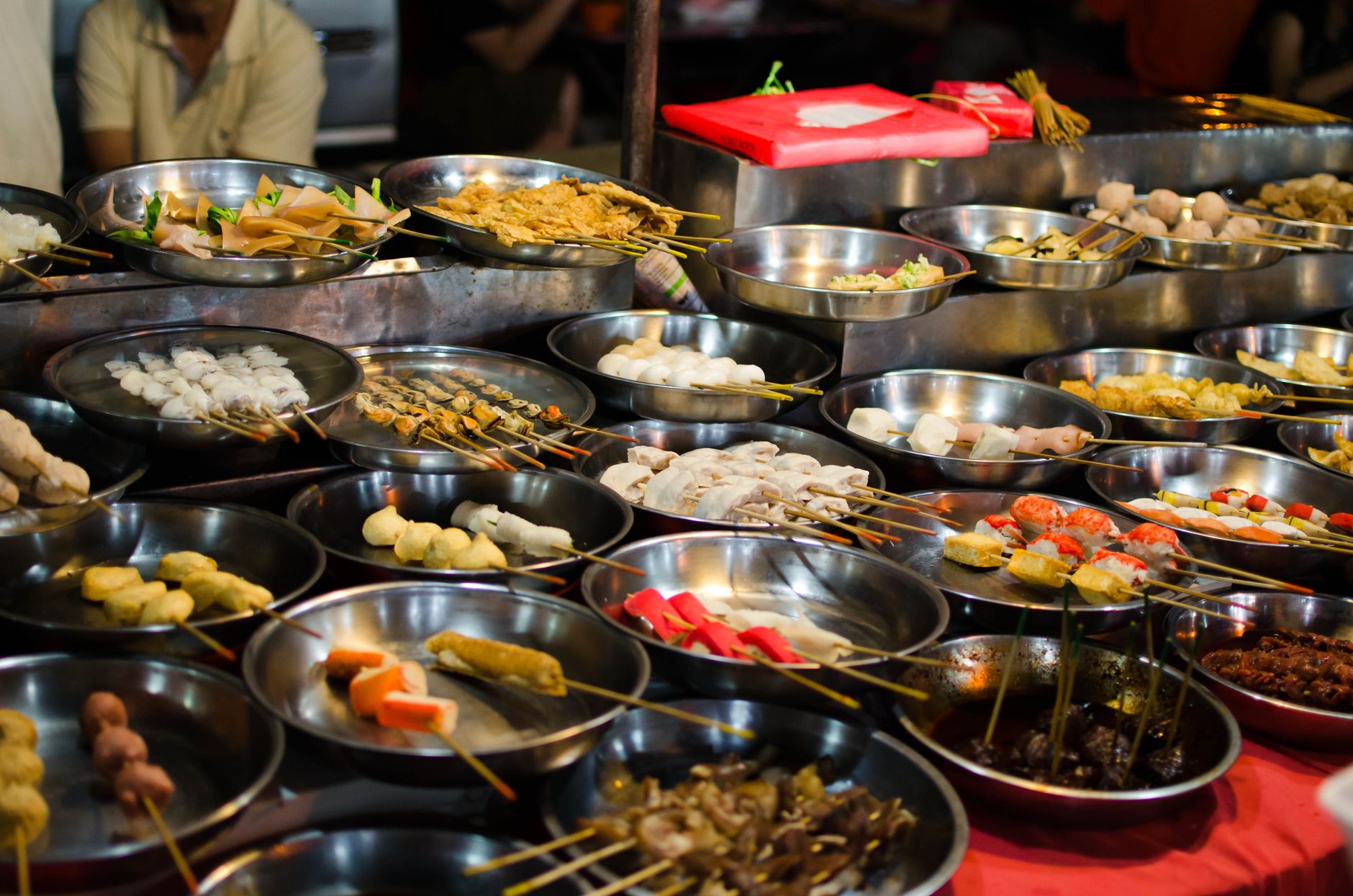
Labor efficiency represents another major benefit identified in the Assurup market analysis. Standardized assembly line layouts, reminiscent of night market stalls, allow small kitchen crews to output high volumes during peak lunch and dinner rush hours. Cross-training staff members becomes simpler when the menu revolves around a concentrated set of preparation techniques, such as deep-frying, grilling, and garnishing.
Supply chain integration has also improved drastically over the last decade. Essential sauces, marinades, and specialized packaging materials are now readily available through major national distributors. This accessibility eliminates the sourcing friction that historically prevented mainstream operators from introducing authentic Asian street food options to their menus.
Integrating these items into an existing commercial kitchen does not require a complete brand overhaul. Many operators find success by introducing limited-time offerings or dedicated side dishes before committing to permanent menu changes. This low-risk testing strategy allows kitchen staff to master new prep workflows while gauging local customer response.
Partnerships with third-party delivery platforms can further amplify the reach of a street food concept. Because many of these dishes were historically engineered for immediate consumption on the move, they tend to travel well in insulated packaging. Maintaining structural integrity during transport is vital for preserving customer satisfaction and securing positive online reviews.
As competition intensifies across the restaurant industry, standing out requires a clear brand identity and a distinct flavor profile. Asian street food offers a proven blueprint for engaging modern diners while maintaining lean operational costs. Operators who embrace these flavor trends today are positioning their businesses for long-term growth and resilience.
For independent restaurant owners and multi-unit operators, the rise of Asian street food represents an immediate opportunity to diversify revenue and lower prime costs. Adding high-margin, high-volume items to your menu can help offset rising labor expenses and fluctuating protein prices. By utilizing existing kitchen equipment to execute small-plate, street-style dishes, you can capture additional lunch traffic and boost late-night delivery sales.
For food industry professionals and investors, tracking street food trends provides valuable foresight into wider market movements. Concepts that prioritize speed, spatial efficiency, and bold flavor profiles are best equipped to navigate shifting economic conditions. Paying attention to these operational models today will help you make smarter capital allocation and menu development decisions in the future.
Sources and methodology
Reported from the public datasets below.
More from the Foodie Pundit Newsroom
- Florida Dining Scene Heats Up With Multiple Openings and Coming Soon Announcements
- How Viral Social Media Content Is Quietly Rewriting Restaurant Business Models
- How Social Media Algorithms Are Forcing a Financial Reckoning in Restaurant Kitchens
- Visual Innovation Drives New Margin Strategies in Commercial Bakery Sector
- Asian Street Food Concepts Redefining Fast Casual Economics and Menu Strategy