The Sixteen-Dollar-An-Hour Question
The battle over that checkout screen's extra line item is a proxy war for the soul of the restaurant industry. As government data highlights a widening wage gap, operators are being forced to answer for what a fair wage actually is.
By Foodie Pundit Newsroom - Published - Updated - Section: Food Culture
Key points
- The traditional model of low wages subsidized by customer gratuity is becoming unsustainable due to shifting worker expectations and increased pay transparency.
- Operators are experimenting with new models like automatic service charges and all-inclusive menu pricing, but these come with challenges in customer perception and legal compliance.
- In a tight labor market, offering a stable and transparent living wage is becoming a key competitive advantage for attracting and retaining skilled restaurant staff.
- The future of restaurant profitability lies in balancing the "true cost" of labor with menu pricing and clearly communicating that value proposition to diners.
You know the moment. It’s a specific, modern kind of anxiety. You’ve just had a perfectly adequate, maybe even quite good, meal.
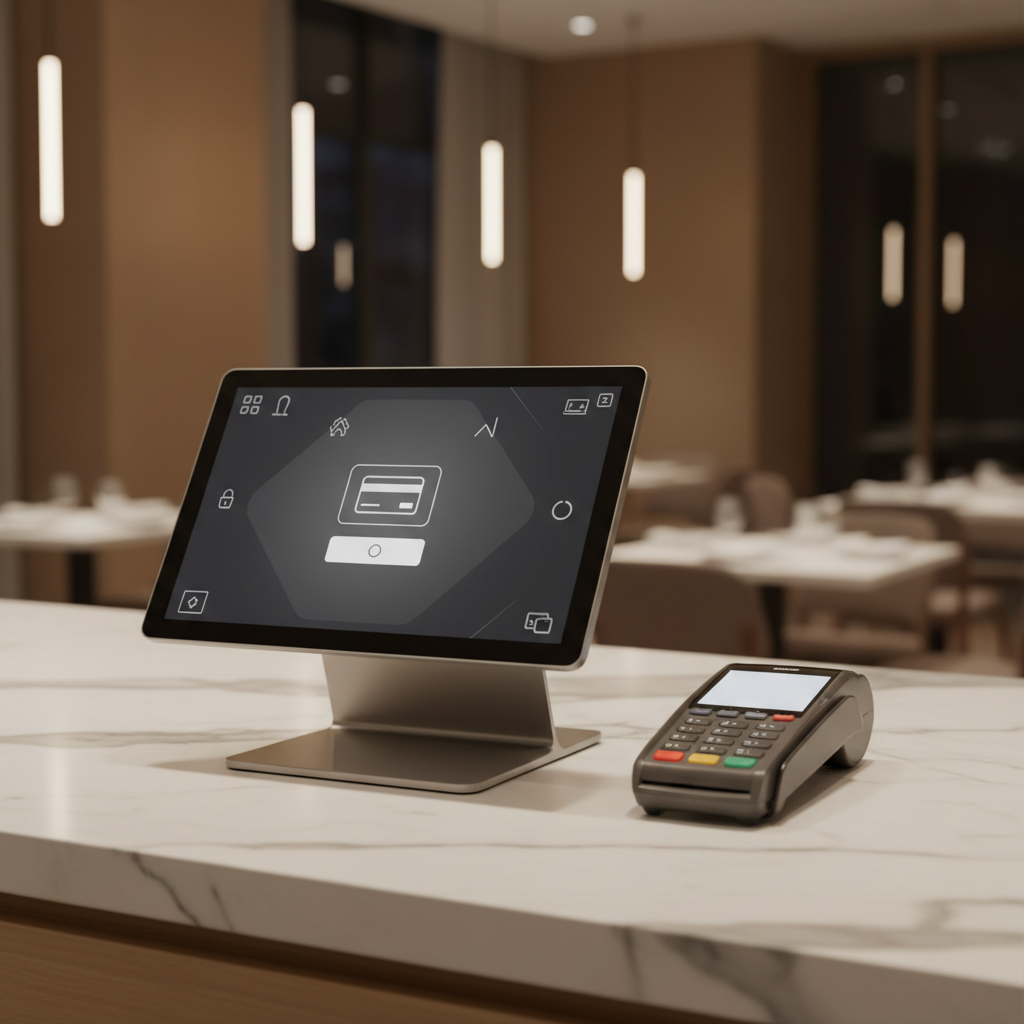
The server, who was both attentive and yet magically invisible right when you needed them to be, drops the check. Or, more likely, they spin a sleek tablet in your direction. Your card is already in the machine.
And there it is. The question. A digital crossroads presented on a glowing screen, asking you to pass judgment in the form of a percentage.
18%, 20%, 25%, Custom. Below it, a line for an additional award. Your thumb hovers over the screen, a bead of sweat forming on your brow.
What is the right answer? What is the expected answer?
This moment of transactional awkwardness, played out millions of time a day in cafes, bars, and restaurants across the country, has become a cultural flashpoint. Online conversations are littered with screeds against the perceived entitlement of the system, while industry reporting is filled with stories of servers who depend on those very awards to make rent. But let’s be clear.
This entire, exhausting discourse is not really about the math of a single meal. It is a proxy war for a much larger, more fundamental conflict: the battle over what constitutes a living wage in the 21st century, with the food and beverage industry as its primary battlefield.
For operators, this is not an academic debate. It is a five-alarm fire. The social contract that long governed restaurant labor, a delicate and often unspoken agreement between owner, worker, and customer, has frayed to the breaking point.
The old model, built on a foundation of legally permissible low base wages subsidized by the situational generosity of strangers (a system we call gratuity), is collapsing under the weight of its own contradictions. And fresh government filings are adding fuel to the fire, laying bare the economic realities that the industry has long tried to paper over.
A recent analysis of occupational wages from a Department of Labor filing does not paint a pretty picture for the hospitality sector. When compared to the U.S. average wage across all industries, food and beverage workers are falling further and further behind. This is not just a gap, it is a chasm, and it is widening.
The data confirms what many in the industry already knew in their bones: the work is hard, the hours are long, and the pay, when stripped of its volatile, unpredictable components, is often shockingly low. For restaurant owners, this data is not just a headline, it is a direct challenge. It forces a reckoning with a business model that, for decades, has outsourced a significant portion of its payroll costs directly to the consumer.
The question is no longer if the model needs to change, but how, and who will bear the cost.
The wage disparity in the hospitality industry is not a bug, it is a feature. It is a foundational element of a system that has been in place for nearly a century. The legal framework allowing for a "subminimum wage" for service employees who receive a substantial portion of their income from customer awards was designed for a different era. It created a two-tiered system where a server’s take-home pay was less a function of their employer's payroll and more a function of foot traffic, check averages, and the ephemeral mood of the dining public.
Let’s translate the Department of Labor findings into concrete terms. The data shows that the median hourly earnings for a fast-food cook, a line cook at a full-service restaurant, or a dishwasher are significantly lower than for workers in sectors with comparable entry-level skill requirements, like warehousing or entry-level administrative support. Those sectors, by and large, do not rely on the public to subsidize their employees’ paychecks.
A forklift operator’s wage is a fixed, predictable cost for their employer. A prep cook’s wage, historically, has been a variable, shunted in part to the final bill as a discretionary charge. This variance is the heart of the problem.
Think about the financial instability this creates. A server working a slow Tuesday night in February might make a fraction of what they earn on a bustling Saturday in December. This feast-or-famine cycle makes financial planning a near-impossibility.
Budgeting for rent, childcare, or student loans becomes an act of high-stakes gambling. The psychological toll of this instability is immense, leading to the kind of burnout and turnover that has become endemic to the industry.
Modern payment technology, the very tablets that induce our checkout anxiety, has ironically made the mechanics of this system more transparent, and in doing so, has exposed its flaws. By presenting the gratuity as a mandatory step in the payment process, these systems have transformed what was once a semi-private, pen-and-paper transaction into a public, high-pressure performance. The technology has inadvertently dragged the awkward, implicit negotiation of service work into the stark light of a user interface.
This has, in turn, created a new form of customer friction. Diners feel cornered, pressured into a financial decision they may not fully understand or agree with. They see a "suggested gratuity" of 22% on a transaction that involved little more than a barista handing a cup over a counter, and they balk.
The resulting frustration is not really aimed at the barista, but at the system itself. They are reacting, rightly, to the feeling that they are being asked to solve a payroll problem they did not create.
This is the core of the issue. The numbers in the government filings simply confirm the lived reality of millions of workers. The reliance on customer-funded awards has created a sector of the economy that is uniquely vulnerable to economic shocks, changing social norms, and the simple, brutal math of a slow Tuesday.
For operators, continuing to rely on this model is no longer just a business choice. It is a significant and growing risk.
Sources and methodology
Reported from primary records. Open any source to verify a claim.
More from the Foodie Pundit Newsroom
- Low Effort Grazing Redefines Evening Dining Dynamics
- Bang Energy Founder Jack Owoc Secures Legal War Chest In Bankruptcy Battle
- How Mentorship Dynamics On Next Level Chef Reflect Shifting Restaurant Industry Economics
- The Hut Has Been Sliced: Yum Brands Sells Pizza Hut for $2.7 Billion
- Kroger and Albertsons Face Critical Court Battle as Regulators Push to Block Massive Grocery Consolidation