That Fifty Dollar Foil Pan of Baked Ziti Is the Best Dinner Deal in America Right Now
Stop paying delivery fees for individual meals. Discover how ordering half trays from local restaurant catering menus can cut your weekly dinner budget in half.
By Foodie Pundit Newsroom - Published - Updated - Section: Deals Value
Key points
- A catering half tray often provides double the amount of food for less than the cost of four individual restaurant entrees.
- Restaurants can offer bulk pricing because catering trays eliminate individual packaging costs and plating labor.
- Mediterranean, Indian, and Mexican restaurants offer exceptional bulk value through kebab spreads, quart containers, and taco bars.
- Portioning bulk food into individual glass containers immediately after the first meal prevents leftover fatigue and provides cheap office lunches.
- To get these prices, you must order 24 hours in advance by calling the restaurant directly and picking up the food yourself.
The modern weeknight dinner has become an exercise in financial frustration. You open a delivery app on a Tuesday evening. You select four basic meals from a neighborhood spot.
You add a side of fries. Then you reach the checkout screen. A delivery fee appears.
A service fee joins it. A small cart fee might sneak in. Add a reasonable tip for the driver, and your casual family dinner suddenly costs ninety dollars.
You close the app. You look at the ingredients in your refrigerator, realize you lack the energy to cook, and end up making scrambled eggs.
This cycle is playing out in kitchens across the country. We have optimized food delivery into a corner where convenience comes with a crushing premium. Meal kits, once heralded as the savior of the busy household, often require forty minutes of active prep time and cost upwards of twelve dollars per portion.
Supermarket hot bars have crept up past ten dollars a pound. The traditional avenues for feeding a family without cooking have all quietly adopted luxury price tags.
Yet there is a massive inefficiency hiding in plain sight. It sits at the bottom of the restaurant website, usually ignored by single diners and couples. It is a PDF document that most people only open when planning a graduation party or a corporate retreat. It is the catering menu.
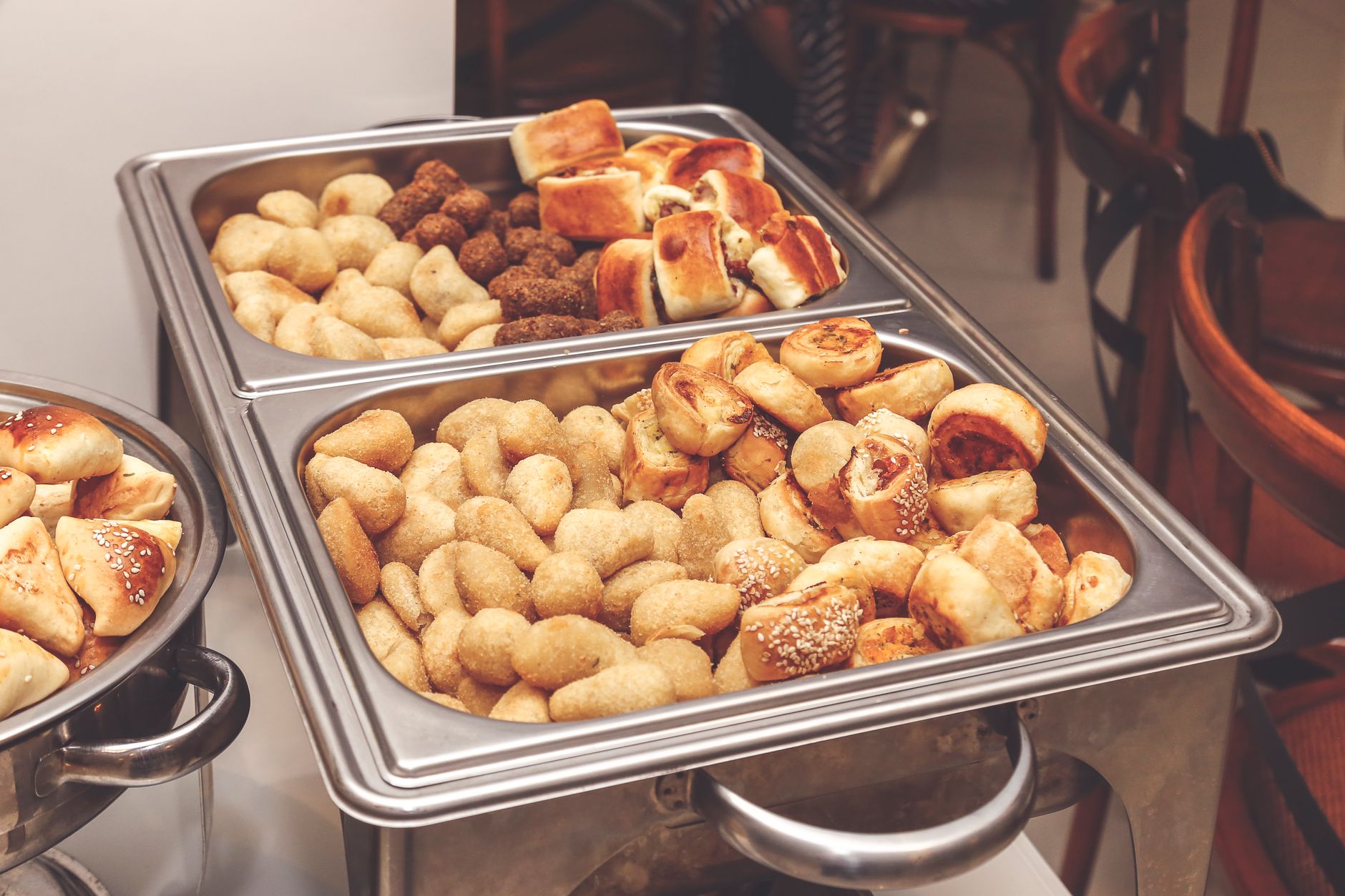
Savvy households are quietly abandoning standard delivery apps. Instead, they are turning to the half tray. That simple aluminum foil pan, typically designed to feed a dozen people at a buffet, has become the ultimate weapon in the value hunt. By treating Tuesday night like a miniature banquet, families are unlocking wholesale food pricing and eating better for less.
To understand why the catering menu is such a powerful tool, you have to understand how broken the standard restaurant transaction has become. When you order an individual entree through a third party platform, you are paying for several layers of invisible friction.
First, you are paying the platform commission. Restaurants routinely mark up their digital menu prices by twenty to thirty percent to offset the fees charged by delivery services. A chicken parmesan that costs eighteen dollars in the dining room might cost twenty four dollars on your phone.
Second, you are paying for packaging geometry. Individual meals require separate containers, plastic lids, individual sauce cups, and carefully compartmentalized boxes. The restaurant has to stock all of this inventory. The kitchen staff has to spend time assembling each individual puzzle.
Third, you are paying for plating labor. Even in a takeout context, a line cook has to portion the starch, place the protein, sauce the dish, and garnish it. This takes time during the chaotic dinner rush. Time is the most expensive commodity in a commercial kitchen.
When you order four separate meals, you multiply all of this friction by four. You are paying for four sets of packaging, four moments of plating labor, and four instances of digital markup. The food itself is actually the cheapest part of the transaction. You are primarily funding the logistics of separation.
The catering menu operates on a completely different economic model. When a restaurant sells food by the tray, they strip away almost all of the logistical friction.
Consider a local independent Italian restaurant. Their dinner menu lists a baked ziti entree for nineteen dollars. It comes in a round aluminum container and feeds one moderately hungry adult. If you order four of them for your family, you spend seventy six dollars before tax and tip.
Now look at their catering menu. A half tray of baked ziti typically costs forty five dollars. A half tray is a standard commercial kitchen measurement. It holds roughly one hundred and sixty ounces of food. That is ten pounds of pasta, ricotta, marinara, and mozzarella cheese. It contains enough calories to comfortably feed eight adults.
For thirty dollars less than the cost of four individual entrees, you receive double the amount of food. The math is staggering. You are paying less than thirty cents an ounce for freshly cooked, restaurant quality food.
The restaurant is not losing money on this deal. In fact, many operators prefer catering orders. Pouring ten pounds of ziti into a single rectangular foil pan takes a prep cook about ninety seconds.
There is no delicate plating required. There is exactly one piece of packaging to inventory. Catering orders are usually placed in advance, allowing the kitchen to prep the food during the slow afternoon hours rather than the frantic dinner rush.
It is a perfect symbiotic transaction. The restaurant gets guaranteed volume and highly efficient labor utilization. You get bulk pricing without having to buy a commercial deep fryer or shop at a restaurant supply warehouse.
The half tray strategy is most famous in Italian American cuisine, but it is not limited to pasta. Almost every culinary tradition has a bulk ordering equivalent that completely destroys the math of individual takeout.
Mediterranean and Middle Eastern restaurants offer some of the best catering values in the industry. Instead of ordering four individual chicken shawarma platters for twenty dollars each, look for the family feasts or catering packages. A small catering tray of grilled chicken kebabs, accompanied by a half tray of yellow rice, a massive container of hummus, and a stack of fresh pita bread, will often price out around sixty dollars.
This spread will feed a family of four for dinner, and provide lunch for the parents for the next two days. The cost per meal drops down to roughly five dollars.
Mexican restaurants frequently offer taco bar catering packages designed for ten people. For roughly eighty dollars, you receive a tray of grilled steak or chicken, a tray of rice, a tray of beans, and a sprawling assortment of salsas, tortillas, and garnishes. When you break this down, you are essentially paying for groceries, but a professional kitchen has done all the marinating, chopping, and grilling.
Indian restaurants utilize a different vessel but the same economic principle. Many neighborhood Indian spots will sell their curries by the quart. A standard takeout order of chicken tikka masala usually comes in a sixteen ounce container for eighteen dollars.
A catering quart holds thirty two ounces and often costs just twenty five dollars. Buy a quart of curry, a quart of dal, and boil your own basmati rice at home. You have just secured three days of high quality dinners for less than the cost of one delivery app transaction.
Adopting the catering menu strategy requires a fundamental shift in how you view weeknight dinners. You have to embrace the concept of planned leftovers.
When you bring home a half tray of food, you are not just buying dinner for Tuesday. You are buying lunch for Wednesday and dinner for Thursday. This requires a bit of household management. You cannot simply leave a massive foil pan in the refrigerator and expect your family to chip away at it. The presentation degrades, and food fatigue sets in.
The secret to making the half tray work is immediate portioning. When you bring the catering order home, serve your family their dinner. Then, before you even sit down to eat, take the remaining food and divide it into individual glass storage containers.
This accomplishes two things. First, it cools the food down faster, which is better for food safety. Second, it transforms a daunting block of leftovers into highly convenient, grab and go meals. When you open the refrigerator on Wednesday morning, you do not see a sad, half eaten tray of pasta. You see a neatly stacked row of premium microwave dinners that cost you four dollars apiece.
This strategy completely eliminates the sad desk lunch. Instead of spending fifteen dollars on a mediocre salad near your office, you are eating restaurant quality chicken souvlaki that you brought from home. The savings compound rapidly. If two working adults substitute just two purchased office lunches a week with catering leftovers, they save over a hundred dollars a month.
If you are going to hunt for value on the catering menu, you have to follow a specific set of rules. The restaurant industry operates on tight margins, and catering menus only work if you respect the operational flow of the business.
Rule number one is to order directly from the restaurant. Do not use a third party app to look for catering trays. Even if an app lists bulk items, they will be marked up to cover the platform fees. Call the restaurant on the telephone. Speak to a human being. Better yet, walk into the restaurant during a slow period, like three in the afternoon, and ask for a physical copy of their catering menu.
Rule number two is to give the kitchen plenty of notice. Do not call a restaurant at six o'clock on a Friday night and demand a half tray of chicken milanese in thirty minutes. Catering pricing is predicated on the kitchen having the time to prep efficiently.
Call them on Monday morning to place an order for Tuesday evening. Some restaurants will accommodate same day catering orders if you call before noon, but twenty four hours of notice is the respectful standard.
Rule number three is to pick the food up yourself. The entire point of this strategy is to eliminate delivery drivers, service fees, and app commissions. Get in your car, drive to the restaurant, and carry the aluminum tray out to your passenger seat.
Rule number four is to pay in cash if you can. Credit card processing fees are a massive burden on independent restaurants. When you are buying high volume items at a lower margin, handing the owner cash is a gesture of goodwill. It ensures that the restaurant actually keeps the money you are paying them.
Rule number five is to ask about off menu bulk pricing. If your favorite Thai restaurant does not have a formal catering menu online, call them anyway. Ask to speak to a manager.
Tell them you love their pad thai and ask if they would be willing to sell you a party sized tray for a flat price. Most independent operators are thrilled to guarantee a fifty dollar sale, especially on a slow Tuesday night. They will do the math in their head and give you a number.
We have spent the last decade trying to disrupt dinner. Tech companies have poured billions of dollars into meal kits, delivery logistics, and ghost kitchens. They promised that software could make feeding a family cheaper and easier.
More from the Foodie Pundit Newsroom
- That new nutrition paper hit FDA without touching your grocery cart
- Halibut paperwork hits the plate before the catch does
- That Bubbly Pineapple Drink Taking Over Fast Casual Menus Is Older Than The Aztec Empire
- Japan and Brazil meet on the plate through okra, meat and grocery prices
- Raising Canes Brings Its Cult Chicken Fingers To Gainesville