Florida Court Ignites Bad Faith Lawsuit, Giving Restaurants a New Weapon Against Insurers
A Florida restaurant owner just got the green light to sue their insurer for allegedly mishandling a claim. The revived 'bad faith' case signals a major power
By Foodie Pundit Newsroom - Published - Updated - Section: Policy Regulation
Key points
- A Florida court revived a restaurant's 'bad faith' lawsuit against its insurer, Safeco, allowing a separate claim for damages related to how the insurance company handled the case.
- The ruling separates the initial insurance policy dispute (contractual damages) from the insurer's conduct (extra-contractual, or 'bad faith,' damages), setting a key precedent.
- This decision gives independent restaurant owners more leverage against insurance companies, potentially forcing insurers to settle claims more fairly and quickly to avoid costly bad faith litigation.
- For restaurant owners, the case highlights the importance of meticulously documenting all communication with insurers and understanding that they may be entitled to damages beyond the policy limits if the insurer acts in bad faith.
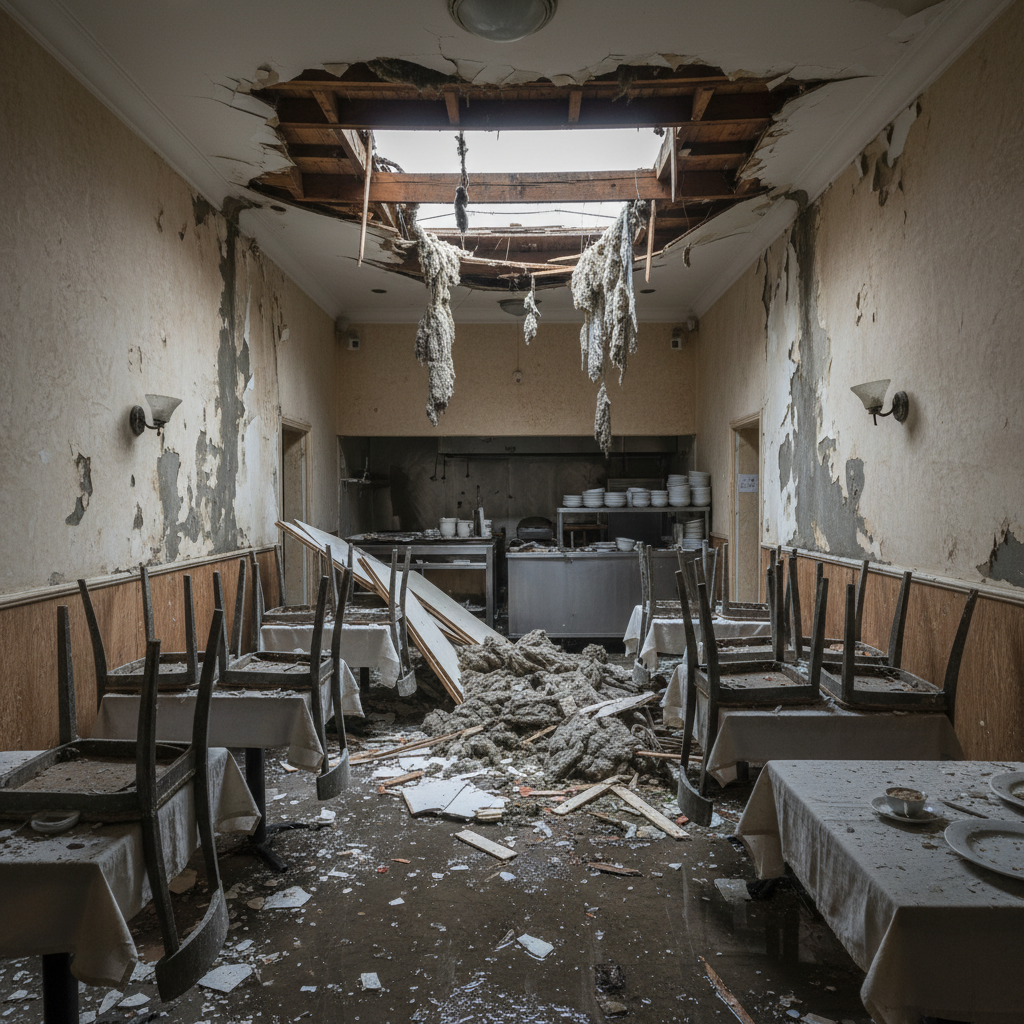
In the high-stakes, roller-coaster world of the restaurant industry, a single catastrophic event can be an extinction-level threat. A fire, a flood, or as was the case here, a roof collapse, isn't just an inconvenience. It's a full-stop crisis that can shutter a beloved local spot for good.
When disaster strikes, restaurant owners lean on their insurance policy as a financial lifeline, a promise that they'll have the capital to rebuild and reopen. But what happens when that lifeline feels more like an anchor?
That's the core question in a bombshell case out of Florida, where an appellate court just handed a major win to an independent restaurant owner in their fight against insurance giant Safeco. The court revived the restaurant's "bad faith" lawsuit, essentially giving it a second life and, in the process, sending a powerful message to the insurance industry. This isn't just about a single damaged roof. It's about corporate accountability, the rights of small business owners, and the immense power imbalance that often defines the relationship between a local restaurant and a multi-billion dollar insurance corporation.
Spilling the legal tea, a "bad faith" claim is a whole different beast than a standard insurance dispute. It's not just about whether the insurance company should have paid for the damages. A bad faith lawsuit alleges that the company deliberately handled the claim unfairly.
Think delaying payments for no good reason, not communicating, or trying to force a lowball settlement on a desperate business owner. It's a claim about an insurer's conduct, accusing them of not just breaching a contract, but of breaching a fundamental duty of good faith and fair dealing. And now, a Florida restaurant has the court's permission to take that monumental accusation to trial. Who's On The Hook
On one side of this legal battle, you have the plaintiff: a restaurant owner. While their name remains out of the headlines for now, they represent thousands of independent operators across the country. They are the entrepreneurs who pour their life savings into a dream, who build community around a menu, and who are uniquely vulnerable to financial shocks.
A roof collapse isn't a line item on a spreadsheet for them, it's a personal and financial catastrophe that threatens their livelihood and the jobs of their employees. They paid their insurance premiums, expecting a safety net. Now, they are arguing that the company they trusted failed to act in good faith when that net was needed most.
On the other side is the defendant, Safeco Insurance Co. Safeco is a major national insurer and a subsidiary of Liberty Mutual Group, one of the largest insurance corporations in the world. With revenues in the tens of billions, it's the definition of a corporate giant. For Safeco, an individual restaurant's claim is one of thousands it processes every year.
Its actions are often driven by complex risk calculations and internal policies designed to manage financial exposure. The company's legal argument, which a lower court initially accepted, was likely that the matter was settled. They dealt with the original contract dispute, so a second lawsuit about "bad faith" was off the table.
The recent appellate ruling says, not so fast.
This sets the stage for a classic David vs. Goliath showdown, where the outcome could have ripple effects far beyond this one Florida case, influencing how insurance carriers like Safeco handle claims from vulnerable small businesses everywhere. The Allegations Unpacked
To understand why this ruling is such a big deal, we need to unpack the legal journey. It's a tale of two distinct legal fights, and the court's decision to keep them separate is the key.
First, imagine the initial incident: the restaurant's roof gives way. Water, debris, and structural damage likely forced an immediate and indefinite closure. The owner does exactly what they're supposed to do, they file a claim with their insurer, Safeco, to cover the immense cost of repairs and likely the lost income from being unable to operate.
This is where the first conflict arose. According to the lawsuit, Safeco didn't resolve the claim in a timely or fair manner. The restaurant owner felt they were being stonewalled or lowballed, and was ultimately forced to file a lawsuit just to get the money they believed they were owed under their insurance policy.
This first lawsuit is what's known as a breach of contract claim. The restaurant sued Safeco to get the benefits of the policy they paid for.
After that case was resolved, the restaurant owner filed a second, separate lawsuit. This is the "bad faith" claim. In this new case, the owner argued that Safeco's behavior during the claims process caused a whole new set of damages, completely separate from the cost of fixing the roof.
These are called "extra-contractual damages," which is legal jargon for damages that go beyond the written contract. Think about it: every week the restaurant is closed waiting for a settlement is another week of lost profits, another week public perception fades, another week valued employees might be forced to find other jobs. There's the enormous stress and anxiety placed on the owner, and the cost of hiring lawyers and experts just to fight for the original claim.
The restaurant's argument is that Safeco's alleged failure to settle the claim in good faith directly caused all this additional pain and financial loss.
Safeco's defense was essentially that you can't sue them twice for the same incident. They argued that the damages were already litigated in the first contract trial. But the Florida appellate panel disagreed, and this is the crucial part of the story.
The court ruled that the first trial was only about the money owed for the roof. It never addressed whether Safeco acted in bad faith. The court saw them as two separate issues: 1) What the insurance policy covered (the contract), and 2) How the insurer behaved (the bad faith claim).
By reviving the case, the court gives the restaurant owner the chance to prove in court that Safeco's conduct was improper and to demand financial compensation for those extra-contractual damages. Financial Fallout
From a corporate risk perspective, this ruling is a significant development for Safeco and the broader insurance industry. The financial stakes in a bad faith lawsuit are exponentially higher than in a simple contract dispute. A breach of contract claim is typically limited to the value of the policy. If the policy covers a million dollars in damages, that's the most the insurer is on the hook for.
Bad faith claims, however, open a Pandora's box of other potential costs. These extra-contractual damages, as discussed, can include lost profits, legal fees from the first trial, and other business losses. Even more terrifying for a corporation's legal department, bad faith verdicts can include punitive damages.
Punitive damages aren't designed to compensate the victim for their loss. They are designed to punish the defendant for outrageous conduct and to deter them, and other companies, from acting that way in the future. In some cases, punitive damages can be many multiples of the original claim, turning a leaky roof claim into a multi-million dollar corporate liability.
The Florida court's decision creates a clear and present financial risk. It reminds insurers that playing hardball on a claim might save them some money in the short term, but it could expose them to a catastrophic and unpredictable loss in a subsequent bad faith lawsuit. This precedent will likely force insurance carriers operating in Florida to be far more careful and diligent when handling claims from businesses, especially smaller ones.
They now have a stronger financial incentive to make a fair settlement offer early on, rather than dragging a restaurant owner through a protracted legal battle. The risk of being hit with a public, and very expensive,
Sources and methodology
Reported from the public datasets below.
More from the Foodie Pundit Newsroom
- Grocery Bills Remain High as Inflation Cools Across Global Markets
- San Francisco Mission District Launch Highlights Changing Restaurant Business Models
- Behind the Bean: The Economic and Technical Journey Driving Modern Specialty Coffee
- Michelin Star Culinary Leaders Launch New Sustainable Seafood Framework
- Fast Casual Chains Retreat as Store Closures Accelerate Nationwide