Giant Eagle lost. your worker's break is your bill now
Your break might still be on the clock. A PA court just ruled Giant Eagle owes workers' comp to an employee hit by a car on her 15-min break, changing
By Foodie Pundit Newsroom - Published - Updated - Section: Coffee Cafes
Key points
- The Pennsylvania Supreme Court system ruled that a 15-minute break is too short for a worker to leave the 'scope of employment,' making the employer liable for off-site accidents.
- The 'Personal Comfort Doctrine' means food industry employers may now be responsible for injuries that occur during bathroom, snack, or fresh air breaks.
- Independent restaurants and grocers face rising insurance premiums as their 'workplace' legally expands to include surrounding public sidewalks.
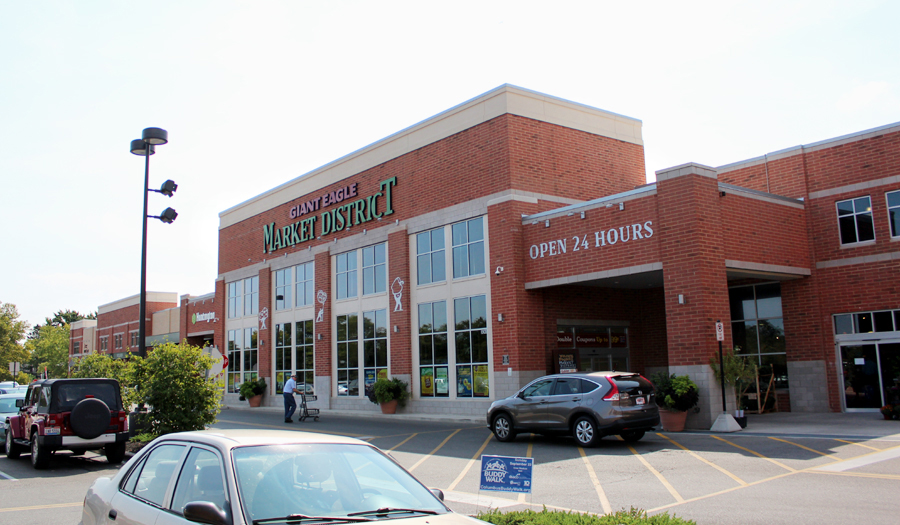
The lines between being \"on the clock\" and \"on your own time\" just got incredibly blurry for the grocery and food service industry. In a move that has sent shockwaves through HR departments from Pittsburgh to Philadelphia, the Pennsylvania Supreme Court system has backed a major ruling involving the grocery titan Giant Eagle. At the heart of the case is a simple, everyday scenario: a worker leaves the building for a quick break and meets with a terrible accident.
The legal fallout from this case is about much more than one pharmacy technician and a car accident. It is about the \"Personal Comfort Doctrine,\" a legal concept that is about to become a household name for anyone running a restaurant, a grocery store, or a commercial kitchen. If your employees step out for a coffee, a cigarette, or a breath of fresh air, you might still be financially responsible for them even if they are standing on a public sidewalk. For the food industry, where fifteen minute breaks are the lifeblood of the workforce, this is the ultimate corporate tea. The Legal Tea
The case centers on an unnamed pharmacy technician employed by Giant Eagle Inc. at one of its Pittsburgh locations. During a standard fifteen minute paid break, the employee left the store premises. While she was away from the grocery store, she was struck by a vehicle.
This was not a slow-motion fender bender. The injuries were significant enough to trigger a massive legal battle over who should foot the bill for her recovery and lost wages.
Giant Eagle, a dominant force in the Mid-Atlantic grocery scene, naturally argued that the moment the employee stepped off their property and onto a public thoroughfare, their liability ended. In the eyes of the corporate legal team, a break is a break. If you are not performing the duties of your job, such as stocking shelves or filling prescriptions, you are not \"in the course of employment.\"
However, an appellate panel disagreed. They leaned heavily on a specific legal niche called the personal comfort doctrine. This doctrine suggests that small breaks for basic human needs (think bathroom trips, water breaks, or a quick snack) are actually beneficial to the employer because they keep the worker productive.
Because these breaks are so short and necessary, the law often views the employee as still being \"at work\" even if they are technically resting. The court ruled that because the break was restricted to just fifteen minutes, the employee did not have enough time to truly leave the sphere of her employment. She was, for all legal intents and purposes, still Giant Eagle's responsibility when that car hit her. Who Is On The Hook
The primary defendant here is Giant Eagle Inc., a multi-billion dollar grocery chain. But the real \"defendant\" in the eyes of industry analysts is the entire concept of the short break. Giant Eagle is now looking at a workers' compensation claim that could span years of medical bills and disability payments.
In the broader food and beverage world, this puts every employer on the hook. Think about the local bistro where the server ducks out the back door to check their phone. Think about the line cook who walks to the corner bodega for a Red Bull because the kitchen is eighty-five degrees.
Under this ruling, if that server trips on a cracked sidewalk or that cook gets into an accident, the restaurant owner could be facing a workers' comp nightmare. Giant Eagle has the deep pockets to litigate this, but for a local grocery co-op or a family-owned cafe, one such claim could be a knockout blow. They sued over coffee break timing
The core of the legal argument wasn't about whether the accident happened. Everyone agreed the employee was hit. The fight was over the clock and the map.
Giant Eagle argued for a strict boundary. They believed that workers' compensation is a deal: the employer covers injuries that happen while the worker is making the company money. The moment the worker stops making the company money and leaves the property, the deal is off.
The plaintiff's side argued that a fifteen minute break is not a \"true\" break. You cannot go home. You cannot run significant errands.
You are essentially tethered to the workplace by the brevity of the time slot. This \"tether\" means you are still under the general control and benefit of the employer. The court agreed that these brief intervals of liberty are necessary for a worker's well-being and, therefore, stay within the realm of the job.
It is a win for worker protections, but a massive new liability for food industry operators who already deal with high-turnover and physical work environments. Financial Fallout
While the specific dollar amount for the pharmacy technician's settlement has not been made public, the financial implications for the industry are staggering. Workers' compensation insurance premiums are calculated based on risk. If insurance companies now have to factor in the risk of off-site car accidents during every fifteen minute coffee break, those premiums are going to skyrocket.
For a massive entity like Giant Eagle, this looks like a line item on a balance sheet. For the independent grocery sector and the restaurant industry, which operate on razor-thin margins (often between 3% and 5%), an increase in insurance costs is a direct hit to the bottom line. It also raises the specter of \"secondary costs.
\" If an employer is liable for an employee's safety during a break, will they start requiring employees to stay in a designated \"break room\"? If they do, they might have to build or expand those rooms, leading to more construction and square-footage costs. Big Tobacco Parallels
Sources and methodology
Reported from the public datasets below.