That Bag of Frozen French Fries? It Probably Came From the Netherlands
Discover how the Netherlands became the world's top exporter of frozen French fries, influencing supermarket prices and global food supply chains with its effic
By Foodie Pundit Newsroom - Published - Updated - Section: Chain Watch
Key points
- The Netherlands is the world's largest exporter of frozen French fries, shaping global supply chains.
- Dutch success is built on a highly integrated system of proprietary potato varieties, advanced processing technology, and superior logistics.
- The influx of Dutch products creates price competition in supermarket freezer aisles, often benefiting consumers but pressuring local farmers.
- The energy-intensive nature of potato processing and long-distance transport poses environmental and cost challenges for the industry.
Your weekly grocery run probably includes a stop in the freezer aisle. Tucked between frozen pizzas and ice cream, bags of golden French fries promise a quick and easy side dish. Have you ever wondered where they come from? The answer is increasingly likely to be the Netherlands.
A small, densely populated country better known for its tulips and canals has quietly engineered a global takeover of the frozen potato market. The Netherlands has become the world’s leading exporter of frozen potato products, shipping an estimated 2.2 million metric tons annually to nearly every corner of the globe. This Dutch dominance represents a significant shift in global food trade, impacting everything from agricultural practices in Idaho to the menu at your local pub.
The sheer scale of this operation is staggering. Dutch processing companies, a handful of which control a substantial portion of the global market, collectively process over 4 million metric tons of potatoes each year. That is equivalent to the weight of roughly 600,000 African elephants. The value of these exports now exceeds $2 billion annually, making frozen fries a surprisingly critical pillar of the Dutch economy.
This is not an overnight success story. It is the result of decades of focused investment in agricultural science, processing technology, and logistical efficiency. By developing high-yield potato varieties specifically suited for processing, Dutch farmers can produce more potatoes per acre than almost anywhere else in the world. This agricultural prowess forms the foundation of a highly integrated and ruthlessly efficient supply chain.
The heart of the Dutch potato empire lies in its unique agricultural model. Unlike the sprawling farms of North America, Dutch potato cultivation is characterized by smaller, family-owned farms that work in close collaboration with massive processing corporations. This symbiotic relationship has created a powerful ecosystem focused on a single goal: producing the perfect potato for freezing.
Firms like Lamb Weston/Meijer, Aviko, and Farm Frites are not just buyers; they are partners in the cultivation process. They provide farmers with proprietary potato varieties, dictate specific growing protocols, and invest heavily in research and development. The Bintje potato, once a staple, has been largely replaced by engineered varieties like the Innovator and the Markies, which are prized for their uniform size, high starch content, and low sugar levels. These characteristics ensure that the resulting French fries are consistently long, fluffy on the inside, and crispy on the outside, with a desirable golden color after frying.
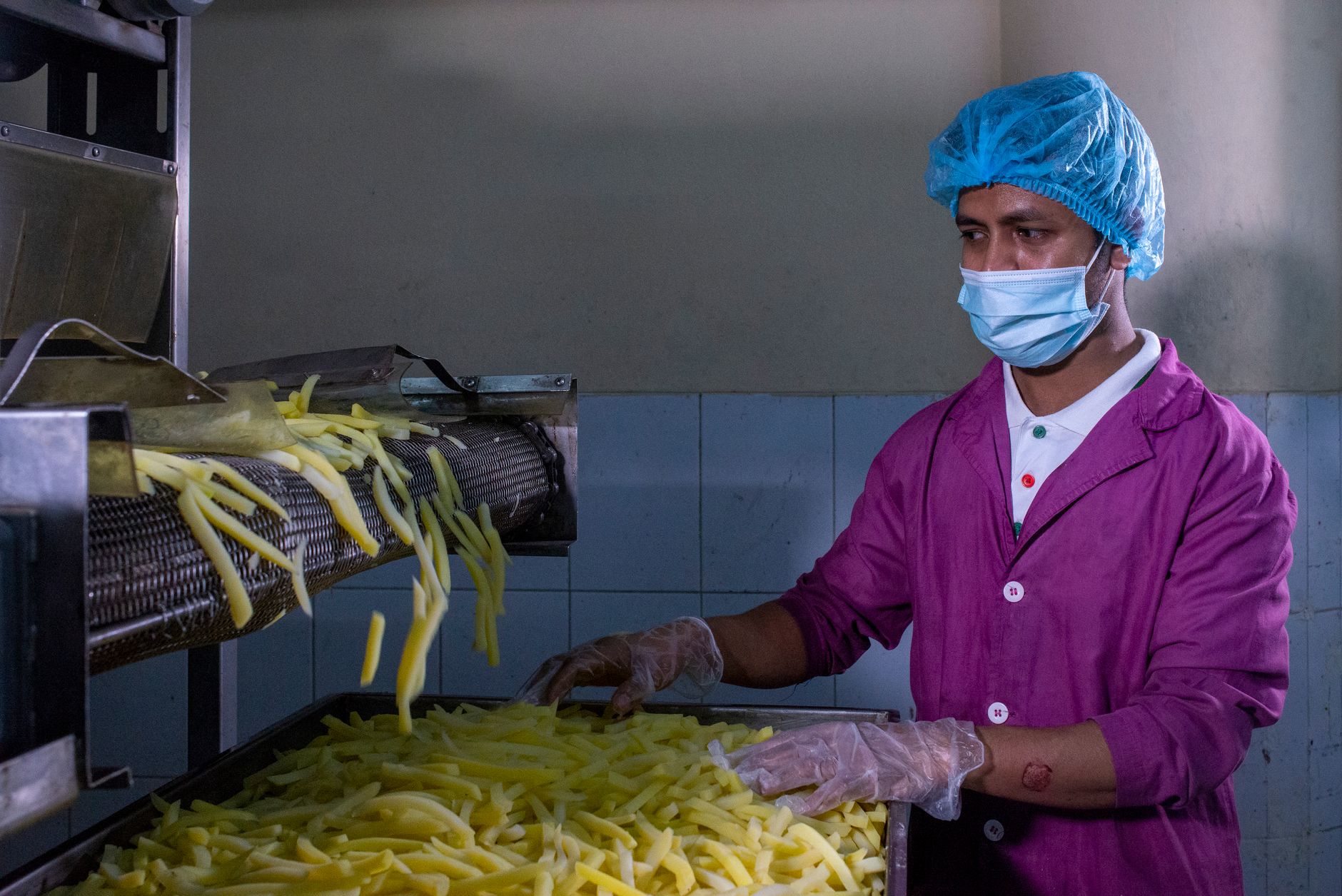
This level of control allows for immense efficiency. Processing plants are strategically located in the heart of potato-growing regions, minimizing transportation costs and time. Once harvested, potatoes are moved to these highly automated facilities where they are washed, peeled, cut, blanched, partially fried, and flash-frozen in a continuous, high-speed process. The level of automation is breathtaking; a single state-of-the-art facility can process thousands of tons of potatoes per day with minimal human intervention.
Logistics is the final piece of the puzzle. The Port of Rotterdam, Europe’s largest seaport, serves as the primary gateway for Dutch fries to the world. Its world-class infrastructure and deepwater access allow for the efficient loading of refrigerated containers onto massive cargo ships destined for Asia, the Americas, Africa, and beyond. This logistical supremacy gives Dutch exporters a significant competitive advantage, enabling them to deliver their products to distant markets faster and often cheaper than local competitors.
The flood of Dutch frozen potatoes has had a profound impact on food markets globally. In the United Kingdom, for example, Dutch and Belgian imports now account for a substantial portion of the French fries consumed in pubs and restaurants. This has put pressure on British potato farmers, who often struggle to compete with the scale and efficiency of their continental counterparts.
Even in the United States, the symbolic home of the French fry, Dutch influence is growing. While the U.S. remains a massive producer, primarily centered in Idaho and Washington, Dutch companies are making significant inroads. They are not only exporting to the U.S. but also investing in processing plants on American soil, bringing their technology and operational models directly into the heart of their biggest competitor’s territory. This move hedges against tariffs and transportation costs while allowing them to capitalize on the massive American appetite for fries.
For developing nations, the availability of affordable frozen fries from the Netherlands has been a catalyst for the growth of Western-style fast-food chains. A restaurant chain in Southeast Asia or South America can now source high-quality, standardized fries from a single Dutch supplier, ensuring a consistent product across all its locations. This simplifies their supply chain and allows them to focus on other aspects of their business. The global ubiquity of the French fry is, in many ways, a direct result of Dutch industrial strategy.
This dominance, however, is not without its challenges. The industry is incredibly energy-intensive, from the climate-controlled storage of raw potatoes to the high-temperature frying and freezing processes. With rising energy costs and growing pressure to decarbonize, Dutch processors are facing a significant operational headwind. They are investing heavily in renewable energy sources and heat recovery systems, but the fundamental energy demands of the business remain a vulnerability.
Furthermore, the reliance on a few specific potato varieties creates a monoculture that is susceptible to disease and climate change. A new blight or a series of droughts could have devastating consequences for the entire industry. Scientists are constantly working to develop more resilient potato strains, but it is a constant race against evolving threats.
For the average consumer, this global trade dynamic manifests itself in the freezer aisle. The private-label or store-brand bag of French fries you pick up at your local supermarket is very likely to contain potatoes processed in the Netherlands. Supermarket chains are driven by price and consistency, two areas where Dutch producers excel. By sourcing from the Netherlands, retailers can offer a reliable product at a competitive price point, often undercutting brands that source domestically.
This competition has forced major American brands like Ore-Ida and McCain Foods (a Canadian company with a huge U.S. presence) to innovate and streamline their own operations. The pressure is immense. Dutch efficiency sets a global benchmark for cost, forcing all other producers to either match it or find a different value proposition, such as focusing on organic or specialty potato products.
The next time you tear open a bag of frozen fries, take a moment to check the fine print on the packaging. You might see "Product of the Netherlands" staring back at you. It is a small indicator of a massive global shift, a testament to how a small country used science, strategy, and logistics to become an unlikely king in the international food trade. The journey of that humble potato, from a Dutch field to your dinner plate, is a modern marvel of industrial agriculture.
This silent takeover of the freezer aisle highlights a broader trend in food manufacturing, where specialization and economies of scale are creating global powerhouses in niche categories. From Danish pork to New Zealand lamb, countries are leveraging their unique strengths to dominate specific segments of the world’s food supply. The Netherlands simply perfected the model for the frozen French fry.
As global supply chains continue to evolve, the Dutch potato empire serves as a case study in how to build a resilient and dominant export industry. It is a story of agricultural innovation, industrial automation, and logistical mastery. It is also a reminder that in our interconnected world, the food on our tables often has a far more complex and international backstory than we could ever imagine.
This shift in the global potato trade has direct consequences for you as a consumer and for the broader food landscape. First, it means more consistent and often more affordable French fries in both supermarkets and restaurants. The efficiency of the Dutch model helps keep prices in check, even as other food costs may be rising. When you buy store-brand frozen fries, you are likely benefiting from this globalized production system.
Second, it highlights the competitive pressures faced by local farmers in many countries. While globalization provides consumer benefits, it can make it difficult for smaller, domestic agricultural producers to compete with the scale of international giants. This can impact local economies and reduce agricultural biodiversity if farmers are pushed towards a narrow range of cash crops or out of business entirely.
Finally, it underscores the hidden environmental costs of our food system. The journey of a frozen French fry from a Dutch field to a dinner table in another continent requires a significant amount of energy, from processing and freezing to refrigerated transport across oceans. Understanding this complex supply chain allows for a more informed perspective on the true cost of convenience and the environmental trade-offs embedded in our global food network.
Sources and methodology
Reported from the public datasets below.
More from the Foodie Pundit Newsroom
- Big Mac, Bigger Moves: McDonald's Taps New President to Supercharge Global Growth
- Midyear Menu Launches Hit Restaurants As Operators Bet Big On Seasonal Flavors
- THE VEGAN VOW: WHEN "PLANT-BASED" ISN'T A PROMISE, IT'S A PROBLEM
- Chipotle Brings Back Carne Asada to Drive Fast Casual Growth
- That $22 Pint of "Craft" Sorbet? It Might Be From a Factory in New Jersey