A Paris Restaurant Mystery Is Simmering West of the City
A project named Polpo Nord is taking shape in Levallois-Perret, but details are still under wraps.
By Foodie Pundit Newsroom - Published - Updated - Section: Restaurant Openings
Key points
- A new restaurant project, Polled Nord, has been noted in Levallois-Perret, west of Paris.
- The name suggests a possible Italian or seafood-focused concept, but no official details have been released.
- This opening reflects a broader trend of culinary development in the suburbs of Paris as they transform into self-sufficient lifestyle destinations.
- The complete absence of an online presence or media campaign is highly unusual, hinting at either a very early-stage project or a deliberately stealthy strategy.
The constant churn of the Paris restaurant scene is a source of endless fascination, a relentless story of openings and closings, triumphs and flameouts. Every week, it seems, a new chef is anointed, a fresh concept is unveiled, and a previously overlooked arrondissement becomes the latest culinary hotspot. Food media, diners, and investors keep a close watch on the central arrondissements, the historic heart of the city where trends are born and reputations are made.
From the bustling bistros of the 6th to the experimental kitchens of the 11th, the narrative of Parisian gastronomy is often written within the confines of the Périphérique. This intense focus creates a feedback loop of hype and attention, a self-perpetuating engine that can make it seem as if nothing of consequence happens beyond the city's ring road.
Yet, to focus solely on the city center is to miss a significant part of the story, a slow but powerful shift in the region's culinary gravity. The suburbs, or banlieues, are not just residential dormitories for the capital; they are dynamic, evolving communities with their own distinct identities and, increasingly, their own vibrant culinary scenes. The Grand Paris project, an ambitious expansion of the metro system, is physically and psychologically stitching these territories closer to the core, erasing old boundaries and fostering a new, more integrated metropolitan identity.
Out in the western suburbs, in the dense and relatively affluent Hauts-de-Seine department, a new wave of culinary energy is building. Here, towns like Boulogne-Billancourt, Neuilly-sur-Seine, and Levallois-Perret are shedding their reputations as mere commuter towns and are emerging as destinations in their own right. This transformation is fueled by a confluence of factors: the migration of young professionals and families from the city in search of more space and a better quality of life, the development of major corporate headquarters that create a built-in audience for lunchtime and after-work dining, and a growing desire among residents for local, high-quality amenities that obviate the need to travel into Paris for a good meal. It is against this backdrop of suburban renewal and culinary awakening that a new and enigmatic project has surfaced: Polpo Nord.
The trail of evidence for Polpo Nord is exceptionally thin, a single thread in a vast tapestry. The project's existence is confirmed by just one piece of documentation: a media mention. In a roundup of Paris-area restaurant news published on July 31, 2026, the name "Polpo Nord" appeared in a list of forthcoming establishments. The article's brief entry placed the project in Levallois-Perret, a commune bordering the 17th arrondissement of Paris to the northwest. And that is the entirety of the factual record.
To understand what this signal means, one must understand the anatomy of a restaurant news roundup. Such lists are often compiled from a mix of sources: official press releases, tips from public relations firms, information gleaned from public records, or sometimes just whispers from industry insiders. A single line item like this, without a press release or website to back it up, suggests a project in its very early stages.
It could be a strategic leak designed to gauge interest, or simply the first public acknowledgment of a plan that has been quietly developing behind the scenes. The late July publication date is also worth noting. The period is a notoriously slow news cycle in Paris as the city empties out for August holidays, meaning a well-placed mention can garner outsized attention.
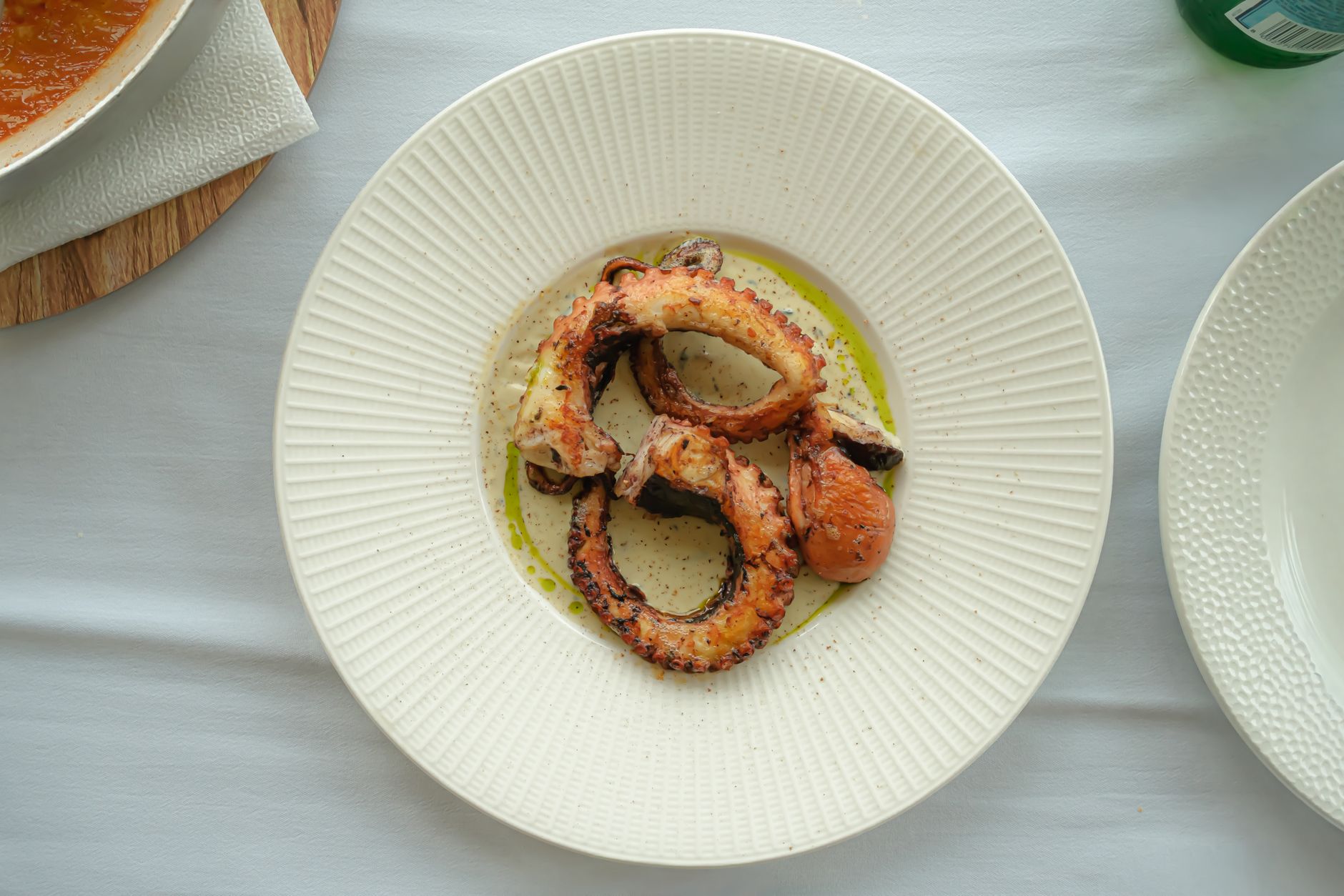
With no specific address, no operator named, and no opening timeline, the name itself becomes the primary clue. "Polpo Nord" is a linguistic curiosity. "Polpo" is the word for octopus in Italian, a direct and evocative nod to Mediterranean, and specifically Italian, cuisine.
It immediately conjures images of seafood, of coastal dining, of lively, sun-drenched meals. "Nord," French for north, complicates this picture. Is it a simple geographical marker, indicating a location in the northern part of Levallois-Perret?
Or does it signal a conceptual fusion, a Nordic culinary philosophy applied to southern ingredients? Could it even be a reference to a northern Italian style? Each possibility opens a different avenue of speculation.
Perhaps most significant in the modern era is what is missing: a digital footprint. There is no registered website, no placeholder Instagram account, no LinkedIn page for a parent company. This absence is telling.
For a new consumer-facing brand, especially in the hyper-competitive restaurant space, securing digital real estate is usually step one. The lack of any online presence suggests a few scenarios. The project could be so embryonic that these steps have not yet been taken.
Alternatively, it could be the work of a seasoned, established restaurant group that is operating in stealth mode, preferring to keep its plans under wraps until a formal announcement is ready. Finally, it could indicate an old-school operator, one less concerned with the modern playbook of digital-first brand building. For now, Polpo Nord exists only as a name on a list, a ghost in the industry machine.
The name Polpo is not an unknown quantity in the European restaurant world, and this is where the mystery deepens. The most prominent association is with the Polpo restaurant group in London, founded by the late, great restaurateur Russell Norman. His first Polpo, which opened in Soho in 2009, was a game-changer for London's dining scene.
It popularized the concept of the bacaro, a humble Venetian-style wine bar serving simple but delicious small plates, or cicheti. The aesthetic was equally influential: distressed plaster, bare light bulbs, industrial-chic furniture, and a no-reservations policy that created a constant, energetic buzz.
The Polpo group expanded, and its DNA has been replicated and referenced by countless restaurants since. If Polpo Nord were to be an international expansion of this celebrated UK brand, it would be a major development for the Paris dining scene. It would signal a significant vote of confidence in Levallois-Perret as a location capable of supporting a well-known, concept-driven brand. A Paris outpost would likely replicate the successful London formula: a casual yet stylish setting, an accessible menu of Italian small plates, a strong focus on the bar program, and an energetic, convivial atmosphere.
However, this is pure, albeit educated, speculation. The connection is based solely on the shared name. It is equally plausible that the name is a coincidence.
A French operator, independent of the London group, may have simply chosen the name for its evocative power. "Polpo" is a strong, memorable, and descriptive word for a restaurant concept. The addition of "Nord" could be the French team's way of distinguishing their project.
Without confirmation, the possible link to the London brand hangs over the project as the most tantalizing question. The answer will fundamentally define the project's ambition and what diners can expect. An expansion of a known international brand comes with a built-in playbook and set of expectations; an independent creation offers a blank slate.
To understand why a project like Polpo Nord might land in Levallois-Perret, one must understand the town itself. Located just across the Périphérique from Paris proper, Levallois is one of the most densely populated municipalities in Europe. It is not a gritty, artistic suburb; it is overwhelmingly residential, famously clean, and conspicuously affluent. Its wide avenues are lined with handsome late 19th and 20th-century apartment buildings, home to a demographic heavy on families, young professionals, and executives.
For decades, Levallois has also been a significant corporate hub. The headquarters of major advertising, media, and cosmetics companies have created a massive daytime population of office workers. This creates a distinct rhythm for local businesses.
The lunch trade is brisk and essential, catering to employees looking for a quick, quality meal. The evening and weekend trade, however, belongs to the residents. This is a population with significant disposable income and a demonstrated appetite for quality.
They frequent the town's upscale food market, its boulangeries, and its wine shops.
The existing dining scene in Levallois reflects this dual audience. It is solid but, by and large, safe. There are numerous traditional brasseries, reliable bistros, pizzerias, and a selection of international cuisines like Japanese and Lebanese.
There are also outposts of well-regarded Parisian chains. What is less common is the type of chef-driven, concept-heavy, and design-forward restaurant that defines dining trends in central Paris. There is a clear gap in the market for an establishment that offers a more sophisticated, metropolitan experience without the need to take the metro into the city.
A place that could serve as a stylish destination for a business lunch, a lively spot for after-work drinks, and a go-to for a special weekend dinner for local residents. A project with a name like Polpo Nord, hinting at a clear culinary concept, seems designed to fill precisely this niche.
Based on the scant evidence, any projection of the diner experience is an exercise in interpretation. But the name, Polpo Nord, is the starting point for any analysis.
If the project is indeed an offshoot of the London brand, diners in Levallois can anticipate a menu centered on Venetian-style small plates. This would mean dishes like fritto misto, arancini, pizzette, meatballs in tomato sauce, and, of course, various preparations of octopus. The format encourages sharing and grazing, making it ideal for both a quick bite at the bar and a full, multi-course meal.
The price point would likely be in the mid-range to premium-casual bracket, accessible for a regular meal but special enough for an occasion. The atmosphere would be a key part of the draw: buzzy, informal, and stylishly designed.
If Polpo Nord is an independent French project, the name still strongly suggests a menu with a significant seafood component. An octopus-centric restaurant is a viable and compelling concept. The "Nord" qualifier remains the wild card.
It could point to a focus on ingredients from France's northern coasts, like Normandy and Brittany, prepared with an Italian sensibility. Imagine seared scallops from Dieppe served with risotto, or Breton lobster with fresh pasta. Alternatively, the "Nord" could signal a culinary philosophy, perhaps blending the simplicity of Italian cooking with the techniques or flavor profiles of modern Nordic cuisine, think fermentation, pickling, or smoking applied to Mediterranean ingredients.
This would be a more avant-garde and intriguing proposition. In any scenario, the name itself promises a clear and focused culinary identity, a departure from the something-for-everyone menu of a typical brasserie.
For those tracking this story, the mystery of Polpo Nord will be solved not by a single dramatic reveal, but by a series of small, concrete developments. These are the milestones to watch for, the steps that will bring the project from a line item into a physical reality.
The first and most crucial sign will be a corporate filing. The registration of a new company with a name like "SAS Polpo Nord" or similar in the French commercial register would be definitive proof. This document, the Kbis, is the project's legal birth certificate, and it would publicly identify the owners and directors, offering the first real clue about the team behind the venture.
Next would come property-related records. A building permit application filed with the Levallois-Perret town hall, or a liquor license request, would pinpoint a physical address. This would allow observers to see the location, assess its potential, and watch for the start of construction or renovation work. Once a site is confirmed, the appearance of construction hoarding or a "coming soon" sign on a storefront would be the most visible confirmation.
The digital silence will eventually have to break. The registration of a domain name like polponord. fr or the appearance of a curated Instagram account would signal that the marketing and branding phase has begun.
This is often followed by job postings on industry websites for key roles like executive chef, general manager, or sommelier. These listings can provide further insight into the scale, style, and ambition of the restaurant. Finally, a formal press release or an exclusive story in a major food publication would mark the project's official public launch, likely revealing the full concept, the team, the design, and an anticipated opening date.
Polpo Nord is currently little more than a whisper, a tantalizing enigma simmering just west of Paris. But its potential significance is substantial. The project serves as a barometer for the evolving landscape of Parisian gastronomy, testing the thesis that the capital's culinary energy is finally and decisively spilling over the Périphérique.
Its location in Levallois-Perret is a deliberate bet on a new kind of suburban diner: affluent, discerning, and hungry for sophisticated local options. Whether it proves to be the Parisian debut of a famed London brand or an entirely new French creation, its success or failure will offer a powerful lesson about the future of dining in the Grand Paris region. For now, we watch and wait for the ghost in the machine to take form.
Sources and methodology
Reported from the public datasets below.
More from the Foodie Pundit Newsroom
- Starbucks Capitalizes on Viral TikTok Trends With Texture-Heavy Summer Beverage Lineup
- Supermarket Spending Stays Elevated as Grocery Prices Hold Firm
- Viral TikTok Coffee Dessert Highlights Changing Consumer Patterns In Packaging and Grocery Demand
- Packaged Goods Mergers Set to Accelerate as Corporate Buyers Mobilize Capital
- Persistent Supermarket Inflation Keeps Weekly Grocery Bills Elevated for American Households