That EPA meat and poultry meeting log offers grocery shoppers zero real answers
An EPA docket log mentions meat processing, but the public filing shows no policy shift, corporate lobbying, spending, or grocery price impact.
By Foodie Pundit Newsroom - Published - Updated - Section: Grocery Cpg
Key points
- EPA's November 2, 2026 Regulations.gov entry documents a planning and closure meeting tied to meat and poultry processing.
- The supplied record names no companies, trade groups, attendees, lobbyists, contracts, grants or dollar amounts.
- The entry places the issue at the processing link between farms and retail or restaurant food, but documents no grocery-price or menu effect.
- EPA is the only identified government actor, and the record supplies no future deadline or dated decision milestone.
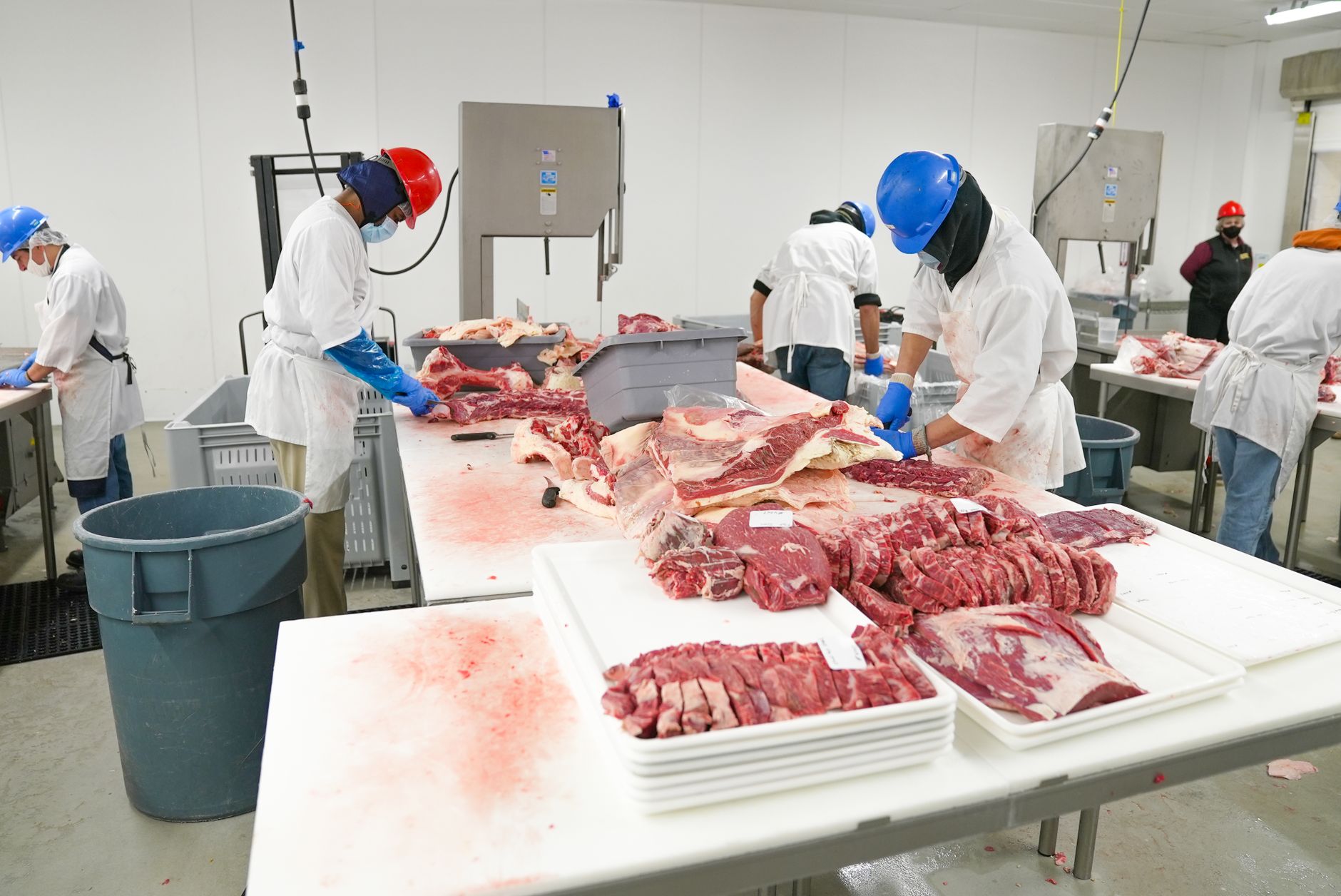
A package of chicken thighs or ground beef lands in a grocery cart only after a long, interconnected crawl from farm pastures to freight corridors to supermarket coolers. That path dictates what livestock operations can raise and sell, followed by the refrigerated trucking, rail, and cold storage networks that shuttle perishables to retail aisles. Meat and poultry processing plants sit right in the middle of that bottleneck. If a federal agency changes how those plants operate, the ripple effects can theoretically touch the livestock buyers, the cold-chain haulers, and the grocery stores or takeout spots setting dinner prices.
A single federal docket entry uploaded this month does not show any of that happening. In an Environmental Protection Agency record posted to Regulations.gov on Nov. 2, 2026, the agency logged an item labeled "Meat and Poultry Processing Sector: Planning and Closure Meeting [W-01-06-15104]" inside docket EPA-HQ-OW-2002-0014. That single line is the entire evidentiary starting point, and based on the public record provided, it is also the stopping point. The documented filing numbers and figures
A careful reading of regulatory filings starts with the actual figures published by the government. The Regulations.gov entry lists zero dollars in award amounts, zero dollars in contract values, and zero dollars in funding ceilings. No public cash awards or federal grants are attached. The EPA published no payment schedules or financial outlays in the file.
The record does provide specific administrative tracking codes. The Regulations.gov platform assigned the entry tracking number EPA-HQ-OW-2002-0014-4178 on Nov. 2, 2026. Within that system, the EPA noted an internal meeting identifier: W-01-06-15104.
Those codes are the only concrete numbers on the page. They confirm administrative docket management, not commercial deals. Without grant figures, contract amounts, or budget allocations published by the agency, nothing in the document indicates that money changed hands or that a financial incentive shaped the session. The paper trail starts small One meeting record is documented
The sole primary document on file is the Regulations.gov log published by the EPA on Nov. 2, 2026. Its title describes a planning and closure meeting for the meat and poultry processing sector, accompanied by internal tracking code W-01-06-15104.
The filing lives within docket EPA-HQ-OW-2002-0014 on Regulations.gov. The site operates as the federal government's public clearinghouse for proposed rules, agency notices, meeting logs, and citizen comments. When the EPA submits an entry, it logs a digital breadcrumb.
The text proves that the agency archived an administrative item regarding the meat and poultry processing category in that specific docket. What it leaves out is significant. The listing names no packing plants, retail brands, supermarket chains, restaurant groups, livestock producers, trade associations, outside contractors, or meeting participants. It does not state whether the discussion produced an industry compact, an updated regulatory guideline, a facility compliance citation, or an internal policy shift.
That distinction matters because administrative titles can easily sound more dramatic than the underlying paperwork justifies. The word "closure" in a federal docket heading is not proof that a slaughterhouse was shuttered, that a grant expired, or that an environmental standard was scrapped. The EPA entry simply refers to a planning and closure meeting without providing agendas, attendee rosters, briefing packets, or transcripts. The supply-chain link is real but limited
The food system connection is obvious from the stated subject: meat and poultry processing. Slaughterhouses, rendering facilities, cut-and-wrap operations, and cold storage depots form the conduit between agricultural livestock producers and retail grocery meat cases. Yet the docket entry points to no operational shift anywhere along that route.
The record lists no new restrictions on livestock production or herd sizes. It notes no change in regional slaughter capacity or weekly processing volumes. It mentions no new rules for refrigerated freight, port terminals, diesel rail transport, or temperature-controlled warehousing.
The entry also leaves out grocery prices, restaurant menu costs, plant labor staffing levels, consumer package labeling, and supermarket inventory supplies. Tying any of those consumer-facing outcomes to this single posting would turn routine regulatory paperwork into speculation. Who holds the file EPA is the identified decider
The EPA is the only government entity identified in the Nov. 2, 2026, Regulations.gov posting. The agency holds federal regulatory jurisdiction over industrial plants, setting Clean Water Act effluent limitations, wastewater discharge caps, Clean Air Act standards, and hazardous material disposal rules for meatpackers.
The agency naturally oversees the administrative docket and any sector-level evaluation linked to it. The entry verifies the EPA's management of the file and the meeting subject.
The record does not reveal what official choice the EPA plans to make, if any. It mentions no specific program division, designated official, statutory enforcement action, facility discharge permit, grant award, or revised industry standard. It does not specify what administrative step the agency intends to take next. The verified fact remains straightforward: the EPA published an administrative entry recording a planning and closure meeting connected to meat and poultry processing. No next dated milestone appears
Shoppers and restaurant operators watching food policy typically look for the next calendar date when an agency move could change commercial realities. A reliable timeline demands an orderly sequence of events. Here, the documented timeline starts and finishes on a single date.
The EPA's Regulations.gov posting gives one specific date: Nov. 2, 2026. Because only this solitary record is available, there is no broader timeline to chart.
The filing does not state whether the meeting happened on Nov. 2, 2026, or whether the agency simply added notes from an earlier gathering to the public docket on that day.
The document contains no public comment closing deadline, no follow-up meeting notice, no statutory effective date, no congressional briefing schedule, and no final decision window. No future calendar date is listed. The only identifiable touchstone is docket EPA-HQ-OW-2002-0014 itself, where the agency deposited the entry.
An administrative filing code is no substitute for a formal deadline, but it is the only verified locator supported by the public record. The money trail is absent No payer is named
A central question in food policy coverage is whether private money influenced an agency discussion. This document does not provide an answer. The EPA entry lists no registered lobbyists, lobbying organizations, corporate sponsors, industry coalitions, packing companies, legal representatives, or commercial consultants.
The public record contains no companion congressional lobbying disclosures. As a result, there are no reported corporate clients, registration forms, lobbying expenditures, targeted regulatory officials, or filing quarters. No sequence of dates connects private advocacy spending to the Nov. 2, 2026, EPA docket update. Cross-referencing disparate filings is standard practice when evaluating corporate influence, but with only this solitary agency log on the table, such comparisons are impossible.
That gap is an essential reporting boundary. The paperwork does not identify anyone who paid to secure a seat at the table or any commercial operation that petitioned the agency during this session. Guessing which trade group or multinational meatpacker might care about this docket would be pure conjecture rather than reporting from verified records. No award or contract is shown
Investigating potential financial motives requires sticking strictly to the text of the filing. The Regulations.gov entry shows no grant amounts, procurement values, budget caps, payment receipts, vendor names, or subrecipient awards. Nothing indicates that the EPA provided taxpayer dollars to an agricultural firm, a trade association, or an external contractor in connection with the session.
There is no documented commercial beneficiary. The record identifies no corporate parents, subsidiary entities, business affiliates, institutional shareholders, or foreign owners. The only named organization is the EPA itself, by virtue of having published the document online. The overlap cannot be invented No beneficiary is identified
A standard test for regulatory influence is whether an organization that stands to gain financially from an agency decision appeared directly before the officials holding decision-making power. In this document, there are no private companies or trade groups to examine. The EPA entry names an entire industrial category, not a specific corporate interest.
Meat and poultry processors share general commercial interests regarding environmental regulations. But the record names no packing companies, nor does it describe what regulatory relief or compliance burden any plant operator might receive from the meeting. Turning a generic industry label into an assertion that specific packers gained special access or economic benefits would misstate the public evidence. No documented touchpoint exists
The record shows no contact between a private beneficiary and agency officials, because the Regulations.gov posting names no commercial entities interacting with the EPA. What reaches your plate The documented path stops at processing
Processing operations connect farm output to grocery aisles. Ranchers and poultry growers raise animals. Processors convert that livestock into retail-ready protein, which refrigerated distribution networks then deliver to grocery store shelves and restaurant walk-ins. The EPA record explicitly cites that central tier of the food chain.
Yet the file does not indicate that the EPA modified operating standards or operational overhead at any point along that route. There is no directive requiring packing plants to install upgraded wastewater filtration systems, adjust daily slaughter chain speeds, recruit additional labor, scale back shifts, reroute delivery fleets, or alter package labels. The entry sets out no new administrative requirements for refrigerated haulers, freight rail operators, port warehouses, or storage hubs.
The demonstrable impact on the broader food system is strictly limited to the category heading itself. It touches the meat and poultry processing sector purely because those words appear in the docket title. The document does not prove any measurable shift in consumer grocery receipts, restaurant menu margins, livestock purchase bids, or refrigerated shipping rates. Absence is not a free pass
The lack of documented consumer consequences does not mean the EPA's internal session lacked purpose. It simply means this isolated record cannot verify what that purpose was. An administrative meeting can signify routine docket maintenance, the closeout of an internal study, or an exploratory staff check-in. The text does not clarify which scenario applies.
This is where primary source verification protects readers from unnecessary alarm. Shoppers should not be asked to assume that an administrative heading signals higher steak prices, enhanced food safety rules, meatpacking layoffs, heavier compliance costs, or supply-chain logjams. None of those claims appears in the EPA's filing. What the record proves Established by the record
The EPA filing on Regulations.gov verifies four basic facts:
1. The EPA published a public entry on Nov. 2, 2026.
2. The agency linked that entry directly to docket EPA-HQ-OW-2002-0014.
3. The EPA assigned the item the title "Meat and Poultry Processing Sector: Planning and Closure Meeting [W-01-06-15104]."
4, as reported by Regulations.gov, as reported by Regulations.gov. The stated topic addresses an industrial category positioned between agricultural livestock producers and retail food sellers.
The documented chronology is brief because the filing itself is minimal. The record carries a single posting date of Nov. 2, 2026. No related lobbying registrations, federal procurement agreements, commercial corporate disclosures, or parallel agency notices accompanied the file. The record provides no target dates for future action, leaving no factual basis for a wider timeline. Not established by the record
The entry does not show that the EPA issued a binding administrative rule. It does not establish that a commercial packing house or a federal regulatory initiative closed down. It does not demonstrate that any private business, agricultural coalition, or outside representative attended, lobbied, paid money, or gained an advantage. It records no federal contract, agency grant, lobbying expenditure, corporate hierarchy, or commercial partnership involving the EPA.
More from the Foodie Pundit Newsroom
- A 1999 paper on heavy metals in food processing just surfaced in an FDA docket
- River Valley Animal Foods leaves a thin paper trail
- NAC officially counts as a dietary supplement after FDA stops excluding it
- Northern Foods landed in an old EPA meat survey file
- Gilbert Foods lands in an EPA meat survey paper trail