The Service Charge Showdown: Are Your Gratuities Actually Going to Your Server?
A viral petition wants to end mandatory service charges. We went deeper. Way deeper.
By Foodie Pundit Newsroom - Published - Updated - Section: Social Virality
Key points
- Public pressure from online campaigns and community discussions can effectively influence restaurant policies on fees and gratuities.
- Service charge regulations vary significantly by country, with some models prioritizing wage stability for workers and others emphasizing consumer choice, but transparency is the key to success in any system.
- Diners can ensure their gratuities reach staff by asking servers directly about distribution policies, using cash, and researching a restaurant's reputation for fair wage practices before visiting.
- The design of digital payment systems, with preset gratuity options, 'nudges' consumer behavior and contributes to 'gratuity inflation,' often without providing clarity on where the money goes.
A petition is making the rounds. You may have seen it. The gist is a plea to the powers that be, in this case the United Kingdom’s government, to ban mandatory service charges and get rid of those preset gratuity options on payment screens.
The argument at its heart is simple: a growing suspicion that the money designated for service isn’t actually making it into the pockets of the service staff. It’s a familiar feeling, that slight hesitation before you tap the 20 percent button. Where is this digital token of appreciation really going?
Is it boosting the hourly wage of the person who just sprinted across the dining room to get you extra napkins, or is it padding the restaurant’s bottom line, destined to cover the cost of a new brick oven or maybe just last month’s linen service invoice?
This isn’t just a fleeting thought bubble over a checkout screen anymore. It’s a full-blown movement, or at least the beginnings of one. The sentiment captured in this petition isn’t isolated to the UK.
It taps into a universal nerve, a growing sense of unease among diners worldwide about the increasing opacity of restaurant billing. We’ve been trained to leave a little something extra, a social contract written in dollars, pounds, and euros. But the rules of that contract are getting fuzzy, lost in a flurry of new fees, surcharges, and digital prompts that feel less like a thank you and more like a shakedown.
The core of the complaint is a crisis of faith. Diners are being asked to contribute more, through more channels, with less certainty about the destination of their funds. And they’re starting to ask for receipts, not just for their meal, but for the entire system.
Foodie Pundit exists to keep a watchful eye on these exact cultural shifts, so we took this petition as a starting point. We dove into the murky waters of service charge legislation, the psychology of digital payment design, and the eternal struggle for fair wages in the hospitality industry. What we found is a complex, often contradictory landscape where good intentions, technological convenience, and old-fashioned greed collide.
It’s a story about more than just a few extra percentage points on a bill. It’s about the future of restaurant work, the ethics of dining out, and whether the simple act of showing appreciation can survive the digital age.
So let’s talk about the power of a petition. In the grand scheme of things, an online signature campaign can feel like shouting into the void. But every so often, the void answers back.
Public pressure has a surprisingly decent track record when it comes to the hospitality industry, an arena uniquely sensitive to customer sentiment. A wave of negative online conversations or a sustained dip in foot traffic can force an operator’s hand far faster than a drawn-out legal battle. We’ve seen this play out time and time again.
A restaurant group introduces a controversial “kitchen appreciation fee,” diners voice their displeasure online, and within weeks, the policy is quietly rescinded, often accompanied by a carefully worded social media apology.
These campaigns gain traction because they tap into a shared sense of fairness. The argument isn’t usually against giving more money. It’s about the lack of control and transparency.
Diners want to reward good service directly. When a mandatory service charge is applied, the power dynamic shifts. The act of giving is no longer a voluntary expression of gratitude; it becomes an obligation, and with that comes a demand for accountability.
The petition in the UK is a perfect example. It articulates a collective suspicion that has been simmering for years. Community discussions are filled with anecdotes from consumers who questioned a service charge only to be met with a vague, unsatisfying answer from management.
Was it split among all staff? Did it supplement wages? Or did it just vanish into the general revenue pool?
The lack of clear answers fuels the fire.
This is where the operator’s perspective becomes crucial. From their side of the table, service charges can be a tool for creating wage equity. A traditional gratuity model often creates a significant pay gap between the front-of-house staff, like servers and bartenders who receive the bulk of the earnings, and the back-of-house staff, like line cooks and dishwashers, who are just as vital to the dining experience but are typically paid a flat hourly wage.
A mandatory service charge allows a restaurant to collect those funds and distribute them more evenly across the entire team. In theory, this is a progressive solution to an age-old problem. It can lift the floor for the lowest-paid workers and create a more collaborative, team-oriented environment.
Industry reporting often highlights this as the primary justification for such fees. The problem, as always, is in the execution. Without strict regulations governing how these funds must be handled, the system is ripe for abuse.
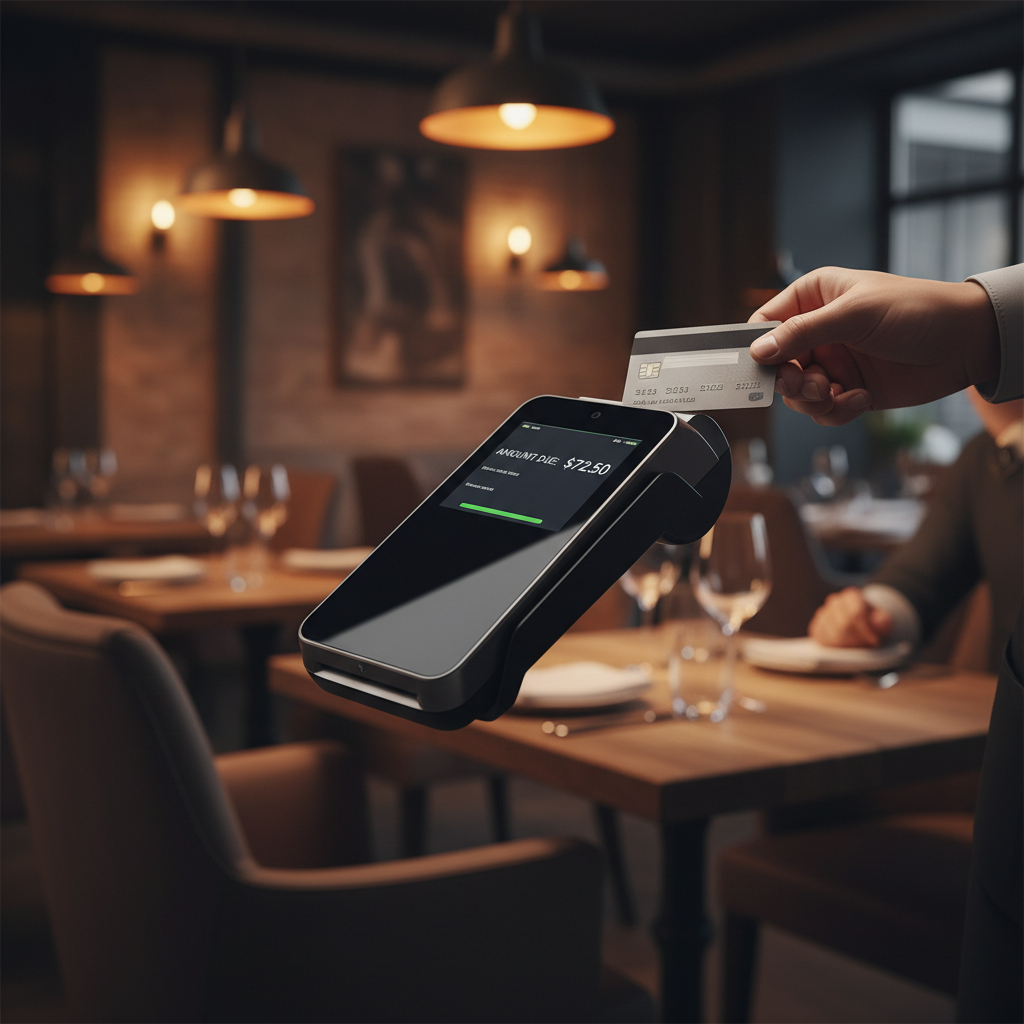
Enter the card reader, the final frontier of the dining experience. The transition from cash to card, and now to contactless payments, has fundamentally altered the gratuity process. Those preset options, typically 18, 20, and 25 percent, are a masterclass in user experience design and behavioral psychology.
They work on a principle called “nudging.” By setting a default or presenting a limited range of choices, the system subtly encourages the user toward a desired outcome. The path of least resistance is to simply tap one of the provided options.
Calculating a custom amount requires an extra step, a moment of cognitive friction that many people, eager to finish the transaction and leave, will happily avoid.
This isn’t inherently evil. It’s the same design logic that asks if you want to save your shipping information or automatically renew a subscription. It’s about making things easy.
But in the context of service awards, it feels different. It commercializes a social custom. What was once a discreetly folded bill left on the table is now a public declaration made under the watchful eye of the server holding the machine.
This pressure, combined with the ambiguity of where the money goes, creates a sense of resentment. The diner feels cornered, prompted to pay a certain amount without full information. Is that 20 percent going to the server, or is it just another fee disguised as a choice?
The design of these interfaces often lacks any and all context. A simple line of text below the options could work wonders. Something like, “100% of gratuities are distributed to our service and kitchen staff,” could instantly alleviate suspicion.
But few establishments bother. This lack of communication leaves the diner to fill in the blanks, and they often assume the worst. The technology that was supposed to make payments seamless has, in many ways, introduced a new layer of social anxiety and mistrust into the dining experience.
Furthermore, this digital nudging contributes to a phenomenon known as “gratuity inflation.” When the default options start at 18 or 20 percent, that becomes the new baseline. The social norm shifts upwards.
While this can potentially mean more earnings for staff, it also raises the stakes for the consumer, who may feel like they are being stingy for selecting the lowest option, even if the service was merely average. It removes the nuance from the act of giving. The system is designed for speed and efficiency, not for thoughtful appreciation.
This friction is at the core of the backlash. People don’t just want to pay; they want to know who they are paying and why.
The confusion in the Anglosphere is not the global standard. A quick trip around the world reveals a variety of different approaches to service charges and worker compensation, each with its own set of trade-offs. In many European countries, like France and Italy, a service charge (“service compris”) is often included
Sources and methodology
Reported from the public datasets below.
More from the Foodie Pundit Newsroom
- Dominique Crenn Expands Hospitality Footprint With Paris Restaurant Launch
- Popeyes Florida Franchisee Bankruptcy Hits A Wall Over 'Negative Proceeds' Sale Concerns
- How Live Fire Cooking and Sustainable Operations Drive Premium Margins at KYU Miami
- Cognac just hit $6 billion because bougie drinks are in
- Global Coffee Market Surges as Specialty Brews Drive Restaurant Profitability