Your Kale Juice Is A Lie Detector Test. Your Frozen Lasagna Is A Black Box
New food safety technology can detect pesticides and drugs in simple foods, but complex processed meals present a major challenge, creating a 'black box' for co
By Foodie Pundit Newsroom - Published - Updated - Section: Beverages
Key points
- The "cleaner" and simpler a food is, like clear juice, the easier it is for new technology to detect contaminants.
- The complex, processed foods many people regularly eat, like frozen dinners or creamy sauces, can confuse advanced food safety sensors, creating a scientific "black box."
- Scientists are working on creating smarter and more resilient sensors to overcome interference from fats, salts, and proteins in food.
- Future advancements in this technology could lead to portable scanners that allow for real-time safety checks throughout the food supply chain.
The green juice in your hand feels like a virtuous choice. It's a clean, cold-pressed elixir of kale, spinach, and apple, a liquid snapshot of purity. You trust it.
And for the most part, science can back you up. A new guard of extraordinarily sensitive technology is getting remarkably good at verifying that purity, detecting infinitesimal traces of pesticides or unwanted chemicals in simple liquids like your juice. But what about the rest of your grocery cart?
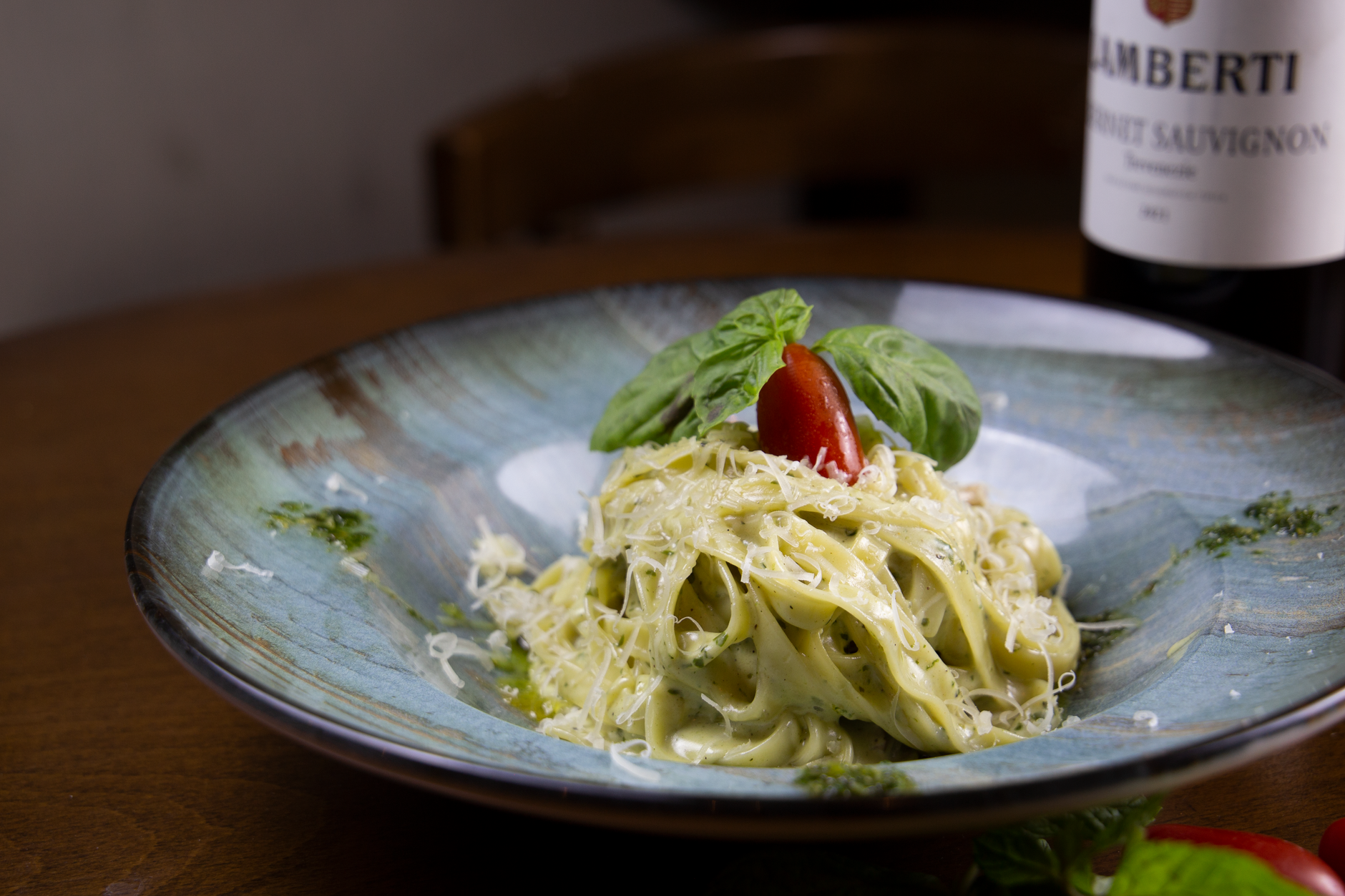
The creamy salad dressing, the microwaveable mac and cheese, the frozen lasagna layered with sauce and cheese and meat? Suddenly, the picture gets a lot murkier. According to startling new research, the very complexity that makes these foods delicious and convenient is turning them into scientific black boxes.
The same technology that can see every secret in your juice goes effectively blind when faced with a "complex food matrix," a term that describes pretty much all the processed foods that fill the modern pantry. This technological gap reveals a fundamental paradox in our food system: the simpler the food, the more we can know about it. The more complex and processed it becomes, the less we might truly understand about what's inside.
A groundbreaking analysis published in Critical reviews in food science and nutrition is pulling back the curtain on this challenge, exploring the immense promise and current frustrations of a technology known as electrochemical surface-enhanced Raman spectroscopy, or EC-SERS. Think of it as the Sherlock Holmes of food safety, a brilliant detective capable of finding clues no one else can. But this detective, for all its power, has an Achilles' heel.
It gets completely befuddled at a messy crime scene.
To understand the problem, you first have to appreciate the technological marvel at its heart. EC-SERS is a hybrid technique, merging the molecular fingerprinting of Raman spectroscopy with the controlled, sensitive nature of electrochemistry. In layman's terms, it creates a tiny, hyper-specific trap.
A specially designed electrode, which also serves as a substrate coated in nanoparticles, is placed into a liquid sample. When a small electrical voltage is applied, it selectively attracts and captures certain "electroactive" molecules, the microscopic persons of interest in a food safety investigation. These molecules, now concentrated on the surface, are zapped with a laser.
The light that scatters back is unique for every molecule, a "Raman signal" that acts like a perfect fingerprint. This signal is then massively amplified by the nanoparticles, allowing analysts to detect astonishingly low concentrations of a target substance. The technique has already proven its mettle as a powerful tool for finding things that shouldn't be there.
Researchers have successfully used EC-SERS to identify a rogue's gallery of contaminants, including banned pesticides on fruit, residual veterinary drugs in animal products, and other unwanted compounds. In pristine, controlled environments, its accuracy is unparalleled. It can sniff out a single problematic molecule in a sea of billions, giving food regulators and manufacturers a potential tool for ensuring what they sell is safe and what they claim is true.
The study highlights its success in straightforward food items, things like tap water, clear juices, and the surfaces of fresh fruits and vegetables. These are what scientists call "simple matrices." They are the equivalent of an empty, well-lit room.
If a single speck of dust falls, it's easy to spot. This is the promise of EC-SERS: a world of radical transparency where the contents of our food can be verified with molecular precision.
But most of what America eats doesn't look like clear apple juice. It looks like a chunky vegetable soup, a creamy yogurt, a savory pot pie. And this is where our super-detective starts to stumble.
The research published in Critical reviews in food science and nutrition systematically lays out how the very nature of complex food torpedoes the precision of EC-SERS. The issue is twofold: "electrode fouling" and "matrix interference." Electrode fouling is exactly what it sounds like.
When you stick the highly sensitive electrode into a sample of, say, salad dressing, it doesn't just attract the one pesticide molecule you're looking for. It gets instantly gummed up with everything else. Fats, oils, proteins, emulsifiers, starches, and other compounds all glom onto the electrode
Sources and methodology
Reported from primary records. Open any source to verify a claim.
More from the Foodie Pundit Newsroom
- How Butter Became a Culinary Highlight in Modern Casual Dining
- Viral Cuisine: How Social Media Algorithms Reshaped Home Cooking
- Dominique Crenn Outlines Strategy for Next Major Restaurant Venture
- Domino's Outperforms Fast-Food Rivals Amidst Price Hikes
- Plant-Based Protein Returns to Foodservice Menus with Refined Formulations and Stable Pricing