Why You Need To Start Eating High End Sushi At Noon On A Tuesday
Discover why the twenty five dollar sushi bento box is the best lunch deal in Chicago right now and how restaurants use it to balance their inventory.
By Foodie Pundit Newsroom - Published - Updated - Section: Deals Value
Key points
- Premium sushi restaurants use lunch specials to move highly perishable inventory before it loses its peak dinner value.
- A standard twenty five dollar lunch bento often contains the exact same cuts of fish that sell for double that price during evening service.
- The lack of alcohol sales during lunch forces restaurants to use aggressive food pricing to get diners in the door to cover daytime labor costs.
- Dinner patrons ordering expensive sake and tasting menus are essentially subsidizing the tight profit margins of the midday lunch crowd.
The West Loop of Chicago is not exactly known as a bargain destination. When the sun goes down over Fulton Market, the neighborhood transforms into a parade of expense accounts and reservation waitlists. Diners routinely drop one hundred and fifty dollars a head on tasting menus, dry aged steaks, and imported seafood.
The sushi counters in this zip code are particularly merciless on the wallet. A single piece of premium fatty tuna can easily set you back twelve dollars before tax and tip. A modest dinner for two, accompanied by a decent bottle of sake, will quickly approach the three hundred dollar mark.
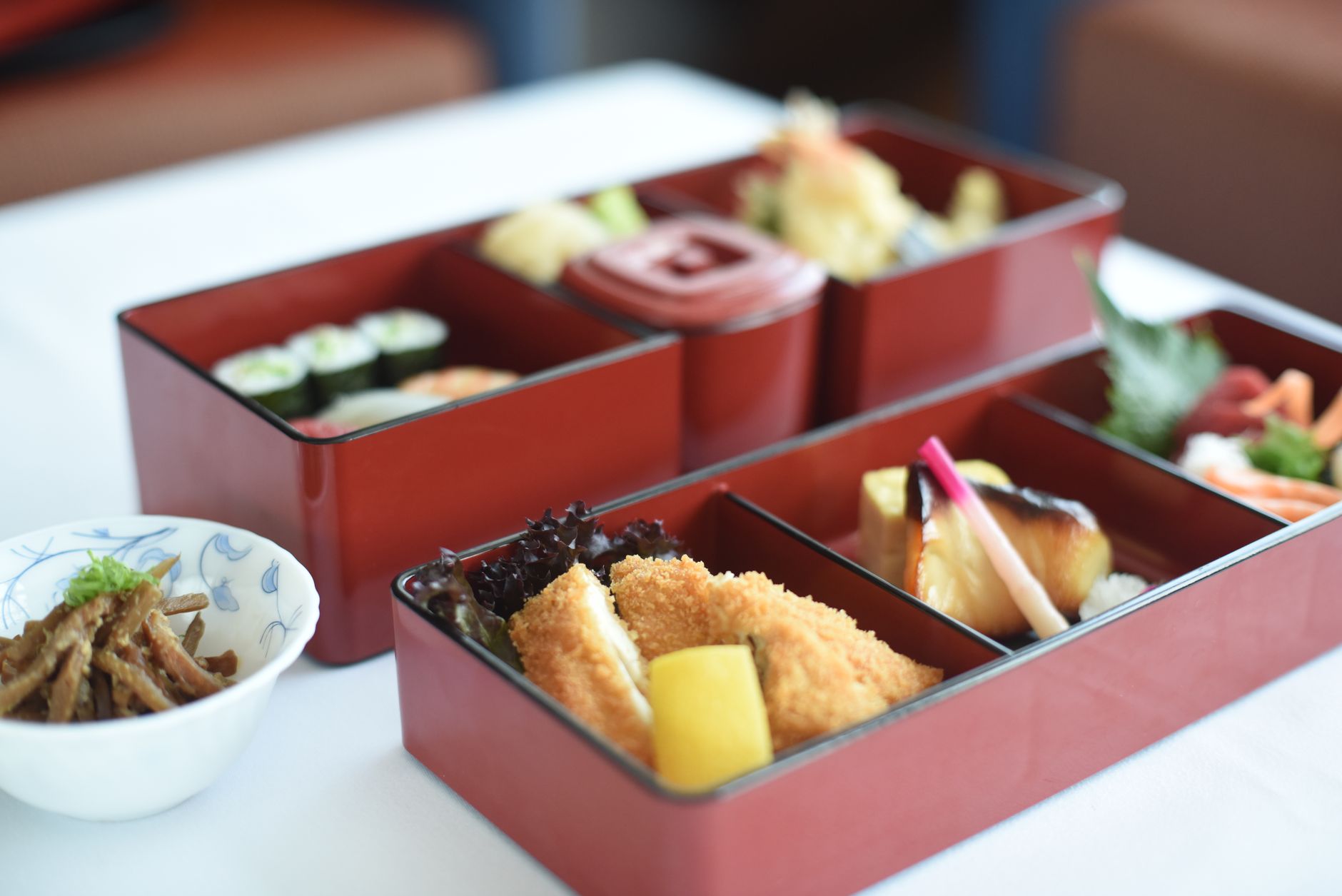
But if you walk into those exact same pristine, minimalist dining rooms at noon on a Tuesday, the financial reality completely flips. The low lighting is replaced by bright midday sun. The ambient lounge music is turned down. And the menu features a bizarre mathematical anomaly. You can order a premium bento box featuring the exact same fish, prepared by the exact same chefs, for twenty five dollars.
This is not a slightly smaller portion. This is not a lower grade of seafood quietly swapped in for the daytime crowd. The twenty five dollar lunch bento often contains a generous cut of salmon, yellowtail, and tuna, alongside a delicate seaweed salad, perfectly seasoned rice, and a bowl of miso soup. If you ordered these items à la carte at seven in the evening, the bill would be closer to sixty dollars.
Welcome to the most inefficient pricing model in the modern culinary world. For the savvy diner willing to shift their eating schedule by a few hours, the high end sushi lunch represents an astonishing arbitrage opportunity.
To understand why this massive price discrepancy exists, you have to understand the brutal economics of premium seafood. Unlike a steakhouse, which can age a ribeye for forty days, or an Italian restaurant, which relies on dry pasta and canned tomatoes, a high end sushi restaurant operates on a terrifyingly narrow freshness window.
When a whole bluefin tuna or a premium side of yellowtail is flown into O'Hare International Airport from the Toyosu Market in Tokyo, the clock starts ticking immediately. The fish is pristine, vibrant, and incredibly expensive. The head chef inspects the delivery, breaks down the fish, and prepares it for service.
For the first forty eight hours, that fish can command top dollar on the dinner menu. It is the star of the omakase tasting. It is the centerpiece of the nigiri platter.
But by the third day, the fish is still perfectly safe and delicious, yet it has lost that microscopic edge of perfection required for a one hundred dollar tasting menu. The texture changes slightly. The color shifts by a fraction of a shade. It is still superior to anything you could buy at a premium grocery store, but it can no longer be served to a demanding dinner patron paying top tier prices.
This is where the lunch menu comes to the rescue. The lunch bento box is the ultimate inventory management tool. It allows the restaurant to move highly perishable, premium inventory before it becomes a total financial loss.
By bundling these cuts into an attractive, aggressively priced daytime package, the restaurant recoups its initial food cost and prevents expensive waste. You are not eating cheap fish. You are eating premium fish that simply aged out of the luxury dinner bracket by a matter of hours.
Let us break down the actual cost of putting that twenty five dollar bento box on the table. A premium sushi restaurant in a major metropolitan market typically aims for a food cost of around thirty percent for its dinner service. This means if they charge you twelve dollars for a piece of fish, the raw ingredient cost them about three dollars and sixty cents.
At lunch, that food cost percentage skyrockets. The fish in your bento box might have a raw wholesale cost of twelve to fifteen dollars. Add in the cost of the imported short grain rice, the artisan soy sauce, the fresh wasabi, and the specialized packaging, and the restaurant is easily spending sixteen dollars just on the ingredients.
When you subtract sixteen dollars from a twenty five dollar menu price, the restaurant is left with just nine dollars of gross profit. From that nine dollars, they have to pay the rent, the electricity, the dishwasher, the servers, and the highly skilled sushi chefs. Mathematically, the restaurant is losing money on every single lunch they serve.
So why do they bother opening their doors before sunset?
The answer lies in the fixed costs of running a restaurant. The rent in Fulton Market is astronomically high, and the landlord expects to be paid whether the dining room is open for four hours a day or fourteen hours a day. The commercial refrigerators are running constantly.
The insurance premiums do not care what time it is. These fixed costs are massive, immovable burdens that weigh heavily on the restaurant owner.
More importantly, sushi chefs are not hourly line cooks who can be sent home when it is slow. Master sushi chefs are highly specialized, salaried professionals. They arrive at the restaurant at ten in the morning to begin the laborious process of washing rice, making tamago, breaking down whole fish, and preparing garnishes for the evening service.
Since the labor is already in the building, and the rent is already being paid, any revenue generated during the lunch hour is better than zero revenue. The bento box does not need to be highly profitable. It just needs to generate enough cash flow to offset a fraction of the daytime overhead.
There is another invisible force subsidizing your cheap midday meal. It is the dinner crowd drinking premium sake.
In the restaurant industry, food brings people in the door, but alcohol pays the bills. The markup on a bottle of wine or a carafe of sake is significantly higher than the markup on a plate of food. A bottle of imported sake that costs the restaurant twenty dollars wholesale might sell for eighty dollars in the dining room.
At dinner, a table of four might easily consume two bottles of sake, a round of specialty cocktails, and after dinner digestifs. The beverage program is the profit engine that keeps the entire operation afloat.
At lunch, beverage sales plummet. The vast majority of daytime diners are returning to an office or driving to a meeting. They order sparkling water, iced tea, or perhaps a single light beer. The restaurant knows they cannot rely on alcohol sales to inflate the midday check average.
Because the beverage profit is virtually nonexistent at noon, the food has to be the sole draw. To convince diners to leave their office desks and sit down in a formal dining room, the food offer has to be undeniably compelling. The restaurant strategically prices the lunch menu down to guarantee a full dining room.
They are entirely dependent on the dinner service, fueled by alcohol sales and premium tasting menus, to generate the actual profit for the business. In a very real sense, the wealthy dinner patron drinking expensive sake at eight o'clock is personally subsidizing your twenty five dollar lunch at noon.
Beyond the raw cost of the fish and the rent, you are also getting a massive discount on elite human capital. Making exceptional sushi requires years of rigorous training. A master chef spends a decade just learning how to properly wash and season the rice before they are even allowed to slice fish for a paying customer.
When you order a lunch bento, that same master chef is often the one preparing your meal. The knife skills required to cleanly slice a piece of yellowtail without bruising the flesh are identical whether it is noon or midnight. The obsessive temperature control of the seasoned rice is exactly the same. You are receiving the exact same level of artisanal craftsmanship that a dinner patron receives, but you are paying a fraction of the premium.
During the lunch rush, the sushi bar operates as a highly efficient assembly line. The chefs are using the midday service to keep their knife skills sharp and to stay in a rhythm before the high stakes pressure of the dinner rush begins. For the diner, this means your food is being prepared by a culinary athlete who is already warmed up and operating at peak performance. You are getting Michelin level technique for the price of a fast casual salad.
Finding these deals requires a specific approach to dining out. Most consumers assume that high end restaurants are universally expensive, regardless of the time of day. They reserve these establishments for anniversaries, birthdays, and major celebrations. When they need a quick lunch on a Tuesday, they default to familiar chain restaurants, heavily processed sandwich shops, or overpriced grain bowl concepts.
This consumer behavior is exactly why the sushi lunch bento remains one of the best kept secrets in the culinary world. The typical office worker will happily spend eighteen dollars on a mediocre chopped salad delivered in a plastic clamshell, completely unaware that for just seven dollars more, they could be sitting in a serene, architecturally stunning dining room eating imported Japanese seafood served on ceramic plates.
The true value hunter understands that price and quality are not always perfectly correlated in the restaurant industry. Price is often a reflection of demand, atmosphere, and time of day. By exploiting the restaurant's need to move perishable inventory and cover daytime fixed costs, the midday diner extracts maximum value from the transaction.
This strategy is not limited to Chicago. You can find identical economic conditions in the high end sushi markets of Seattle, Denver, Atlanta, and Boston. Anywhere you find expensive commercial real estate, highly perishable imported seafood, and a stark divide between lunch and dinner dining habits, you will find the midday arbitrage.
Stop saving the best sushi restaurants in your city exclusively for expensive evening celebrations. Look up the top rated omakase and premium sushi spots in your downtown or commercial district and check their weekday daytime hours. You are looking for places that serve high end tasting menus at night but remain open for lunch.
Skip the specialty rolls and the à la carte nigiri during the day. The true mathematical value is always locked inside the combination bento box or the chef's assorted lunch special. This is the specific vehicle the restaurant uses to balance their inventory.
Do not expect the same lingering, romantic atmosphere you would get at dinner. Lunch service is designed to be efficient. The staff expects you to order quickly, eat your bento, and vacate the table so they can seat the next office worker. Embrace the speed.
Finally, recognize that this deal only exists because it is slightly inconvenient. It requires leaving your desk, walking to a formal restaurant, and sitting down for forty five minutes in the middle of a Tuesday. But if you are willing to break your routine, you will be rewarded with the highest quality protein, prepared by the most skilled chefs, at the lowest possible margin the restaurant can legally sustain.
Sources and methodology
Reported from the public datasets below.
More from the Foodie Pundit Newsroom
- Why That Native Texas Weed Is Suddenly In Your Eight Dollar Iced Tea
- Brazil and Japan put food safety on the same plate as U.S. prices rise
- Anchorage's plate price keeps climbing, and the public money trail is thin
- Kissing Coconuts Brings Plant Forward Jamaican Fusion To Fort Lauderdale
- The Mysterious Pub Project Sweeping Across Florida Cities