Fat Rosie's Might Be Eyeing Miami, But The Details Are Still Blurry
A popular Illinois taqueria is rumored to be expanding into Florida, but so far the paper trail is thin.
By Foodie Pundit Newsroom - Published - Updated - Section: Restaurant Openings
Key points
- A media mention suggests a Fat Rosie's might open in Vin_E_LAND Pointe in Orlando, not Miami.
- The brand, part of Scott Harris Hospitality, is a popular, high-energy taqueria concept from Illinois.
- Key signals to watch for are building permits, liquor license applications, and official announcements from the company.
- The competitive Miami market means a new entrant needs a strong identity; Fat Rosie's would likely compete with other large casual dining chains.
Is Fat Rosie's Taco & Tequila Bar coming to Miami? A recent mention in an Orlando real estate tracker has kicked off speculation that the Illinois-based taqueria is planning a Florida expansion. While the evidence is far from concrete and contains conflicting locations, the prospect of a new player in the city's already vibrant Mexican food scene is enough to generate buzz.
For now, details are scarce, and the story is one of smoke rather than fire, but it points to a brand with growth on its mind and a potential new destination for taco lovers in the Sunshine State. The current evidence, however, suggests a game of restaurant telephone, where whispers of expansion have crossed state lines and city limits, leaving a trail of questions. What we have is a single mention, a breadcrumb, linking a well-known name to a new market.
It's not much to go on, but in the fast-paced world of restaurant intelligence, sometimes the smallest hint can signal a larger move. This isn't a done deal; it's a lead, a promising thread in a complex weave of real estate, branding, and culinary ambition. For those who follow the ins and outs of restaurant openings, this is the starting line.
It's the initial tip-off that requires verification, a puzzle that needs solving. The mention is just enough to pique interest and start the clock on the watch for more definitive proof, like permits, official announcements, or a "coming soon" sign. The context of the mention is also key.
It appeared in a roundup of restaurant openings, a common format for real estate and food news publications. These lists are often compiled from a variety of sources, including public records, industry chatter, and press releases. Sometimes, information can be preliminary or even speculative.
A brand might be "exploring" a market, which gets translated into a "planned" opening. That's the situation we find ourselves in now: trying to decipher the signal from the noise. Is Fat Rosie's genuinely planting a flag in Florida, or is this a case of mistaken identity or a deal that's still in its earliest, most fragile stages?
The truth likely lies somewhere in between, but until more evidence surfaces, we're left to connect the dots. The discrepancy in the location mentioned in the evidence, Vineland Pointe in Orlando versus a potential Miami spot, is the central mystery. It suggests that while the brand may be looking at Florida, the exact city is not yet set in stone, or perhaps the initial report was flawed.
It's a classic "what we know, what we don't know" scenario that is all too common in tracking new restaurant ventures. The process is rarely linear, and the path from a signed lease to an open restaurant is often fraught with delays and changes. For now, the Fat Rosie's to Florida story is a compelling but incomplete narrative.
It's a reminder that behind every new restaurant opening is a long and often complicated journey, one that starts long before the first taco is served.
The evidence for a Fat Rosie's in Florida is thin but tantalizing. A single media mention from WhatNow Orlando, dated July 11, 2026, lists Fat Rosie's among a number of restaurants being tracked for new openings. The report specifically places the planned location at Vineland Pointe, a large outdoor shopping center in Orlando.
This is the sole piece of concrete information linking the brand to the state. However, the project name we are tracking is "Fat Rosie's opening in Miami". This discrepancy is the core of the uncertainty.
Is the brand opening in Orlando, Miami, or both? Or was the initial report a mix-up? The WhatNow Orlando piece is a standard real estate and business development report, the kind of article that aggregates information about upcoming commercial tenants.
These reports are generally reliable but can sometimes be based on preliminary leasing information that is subject to change. They are a starting point for investigation, not a final confirmation. Adding to the confusion, another media mention in our evidence stack, dated August 5, 2026, discusses a Huey Magoo's "Opening Soon" at Midway Crossings Mall in Miami.
This piece of information seems entirely unrelated to Fat Rosie's at first glance. However, in the world of restaurant intelligence, sometimes seemingly disconnected facts can be part of a larger picture. Perhaps there is a shared developer or leasing agent involved, or maybe it's just a coincidence, a ghost in the machine of data collection.
For now, we treat it as an outlier, a piece that doesn't quite fit the puzzle. The primary source remains the WhatNow Orlando mention. Without further corroboration, such as building permits filed in Miami-Dade County or a press release from the restaurant group, the Miami expansion remains purely speculative.
The Orlando location, while mentioned, also lacks a firm opening timeline or official confirmation from the brand itself. We are in the earliest stage of intelligence gathering, where the "signal" is weak and requires amplification through further research. It's a waiting game.
We will be monitoring public records, social media, and industry news for any further mention of Fat Rosie's in connection with South Florida. The lack of a clear timeline, a specific address in Miami, or any official announcement from the company means we must approach this with a healthy dose of skepticism. The story is a "maybe," not a "definitely."
It highlights the speculative nature of tracking new openings, where rumors and partial information are the currency of the trade. The current status is "unconfirmed." The dots are there, but they are faint and disconnected.
The challenge now is to find the lines that connect them, if they exist at all.
Fat Rosie's Taco & Tequila Bar is not a newcomer to the restaurant scene. It is a well-established and popular brand in its home state of Illinois, part of the Scott Harris Hospitality group. The group, founded by restaurateur Scott Harris, is a significant player in the Chicago-area dining landscape, known for creating a diverse portfolio of concepts that range from Italian to American to, of course, Mexican.
Fat Rosie's is one of their flagship brands, celebrated for its high-energy atmosphere, extensive tequila list, and a menu of familiar but well-executed Mexican-American fare. The vibe is a key part of the brand's identity. The restaurants are typically large, colorful, and loud, decorated with festive, sometimes kitschy, Mexican-inspired decor.
It's a place designed for group outings, celebrations, and a lively night out, often featuring music and a party-like environment. The brand's mascot, a donkey also named Fat Rosie, is a central part of the fun-loving, slightly irreverent marketing. This is not a quiet, fine-dining experience; it's a fiesta.
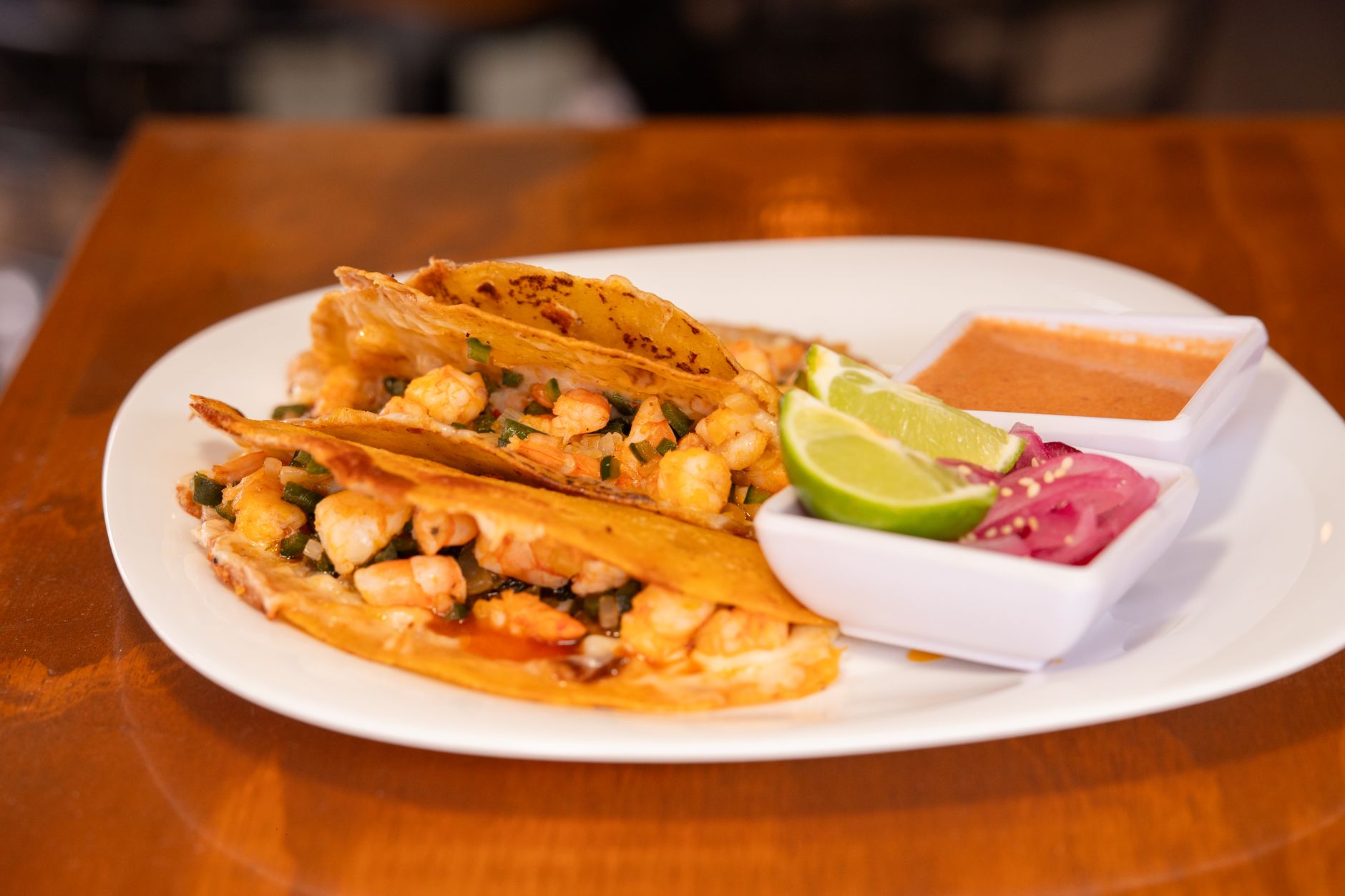
The menu is approachable and broad, designed to appeal to a wide American audience. You'll find all the expected hits: tacos with various fillings, oversized burritos, sizzling fajitas, enchiladas, and large platters of nachos. It's comfort food, Mexican-style, served in generous portions.
The bar program is equally important, with a focus on margaritas, both classic and flavored, served in large glasses, as well as a deep selection of tequilas and mezcals. This combination of a fun atmosphere, approachable food, and a strong bar program has proven to be a successful formula for Scott Harris Hospitality. The group has steadily expanded the Fat Rosie's concept, opening multiple locations throughout the Chicago suburbs, including in Naperville, Schaumburg, and Frankfort.
This pattern of growth in its home market suggests a business model that is scalable and a brand with broad appeal. An expansion into a new state like Florida would be a logical next step for a hospitality group with ambitions beyond its local market. Florida, and particularly South Florida, represents a major market with a strong tourism industry and a large population that dines out frequently.
For a brand like Fat Rosie's, which thrives on a fun, vacation-like atmosphere, it could be a perfect fit. The move, if it is indeed happening, would signify a new phase of growth for Scott Harris Hospitality, taking their successful Illinois concept to a national stage. It's a big leap, one that requires significant capital and logistical planning.
It also involves risk, as the Florida restaurant market is notoriously competitive. But for a group that has honed its concept over many years and multiple locations, it's a calculated risk, a bet on the universal appeal of tacos, tequila, and a good time.
If Fat Rosie's were to land in Miami, the question is, where? The city and its surrounding areas are a patchwork of distinct neighborhoods, each with its own demographic, vibe, and competitive landscape. The "mediamention" evidence points to two very different locations, Orlando and Miami, which complicates any neighborhood analysis.
However, if we assume the "Miami" part of the project is the true target, we can speculate on what kind of neighborhood would make sense for this brand. A concept like Fat Rosie's, with its emphasis on high-volume, festive dining, typically thrives in areas with high foot traffic, strong demographics for casual dining, and often, a connection to retail or entertainment. One potential fit mentioned in the evidence is a shopping mall.
The mention of Midway Crossings Mall in connection with Huey Magoo's (though not Fat Rosie's directly) points to the kind of environment where a brand like this could succeed. Malls and large open-air shopping centers like Vineland Pointe in Orlando (the location mentioned in the WhatNow Orlando article) offer a captive audience of shoppers and families. These locations provide ample parking, built-in foot traffic, and a context of leisure and spending.
A large restaurant that can accommodate big groups and families is a valuable amenity for a mall developer. Areas like Doral, which has a mix of residential and commercial development, or the suburban stretches of Kendall, are filled with the kinds of shopping plazas and lifestyle centers where Fat Rosie's has flourished in Illinois. These neighborhoods have a large population of families and young professionals looking for accessible, fun dining options.
The competitive landscape in Miami's Mexican food scene is fierce. It ranges from authentic, family-run taquerias in neighborhoods like Little Havana and Homestead to high-end, chef-driven Mexican restaurants in Wynwood, Brickell, and South Beach. There are also numerous successful casual chains, both local and national.
A new entrant would need a clear identity and a strong value proposition. Fat Rosie's would likely not compete with the small, authentic taquerias. Its model is different.
It's more of a "restaurant-tainment" concept, selling an experience as much as a meal. It would compete more directly with other large-format, high-energy chains like a P. F. Chang's or a Cheesecake Factory, but with a specific Mexican theme.
Its target audience is not necessarily the food connoisseur seeking the most authentic al pastor, but rather a group of friends looking for strong margaritas and a fun Friday night, or a family celebrating a birthday. If the Orlando location at Vineland Pointe is the real story, the logic is similar. Vineland Pointe is a massive shopping complex located near the heart of Orlando's tourist district, close to theme parks and outlet malls.
This is a prime location for a restaurant designed to appeal to tourists and large groups. The high-volume, festive model of Fat Rosie's is practically tailor-made for such an environment. The ambiguity between Miami and Orlando is the key puzzle.
But in either city, the strategy would likely be the same: find a high-traffic, retail-heavy location where the brand's party atmosphere can draw in crowds looking for a good time. The specific neighborhood will be the first major clue as to the brand's strategy and target demographic in the Florida market.
The story of Fat Rosie's potential Florida expansion is in its infancy. The most critical next step is to find corroborating evidence that moves this from speculation to a confirmed project. The first and most important thing to watch for is a building permit application.
A permit filed with a city or county building department in either the Miami or Orlando areas, listing Scott Harris Hospitality or Fat Rosie's as the tenant, would be the first piece of hard evidence. These are public records, and they are the gold standard for confirming a new restaurant. We'll be watching the permit databases for Miami-Dade and Orange counties closely.
The second thing to watch for is an official announcement from Scott Harris Hospitality. A press release, a social media post, or an update to the "locations" section of the Fat Rosie's website would provide definitive confirmation. Brands often try to control the timing of these announcements to maximize media impact, so it might not come until a lease is signed and plans are further along.
Sources and methodology
Reported from the public datasets below.
More from the Foodie Pundit Newsroom
- New York Fine Dining Industry Reshaped as Michelin Unveils Latest Star Rankings
- UK Supermarket Price War Deepens As Latest Basket Cost Data Reveals Retail Champions
- Eden Foods Reignites Legal Battle With CBD Company, Alleging Blatant Trademark Settlement Violation
- Something Big Is Cooking In Orlando, But What Is It?
- Professional Pastry Chefs Unveil Technical Secrets Behind Elite Croissant Lamination