The Modern Coffee Supply Chain Unpacked From Highland Farms to Precision Extraction
From high-altitude farms and experimental fermentation to thermodynamic roasting, the journey of specialty coffee relies on high-tech logistics and extreme prec
By Foodie Pundit Newsroom - Published - Updated - Section: Coffee Cafes
Key points
- Specialty coffee processing has evolved beyond standard wet and dry methods into advanced anaerobic fermentation techniques that create distinct flavor profiles at origin.
- Logistical safeguards like optical sorting and hermetic barrier packaging are critical for preserving green coffee quality across oceanic transit.
- Precision extraction parameters and high-end roasting science allow retail operators to capture premium margins by elevating coffee quality.
The global market for specialty coffee has undergone a massive transformation over the past decade, turning what was once a simple morning caffeine ritual into a highly sophisticated global supply chain driven by modern agricultural science and precise processing methods. Behind every premium espresso or pour-over lies an intricate journey that spans multiple continents, shifting climate zones, and specialized craftsmanship.
As detailed in recent reporting by MENAFN, the journey begins in equatorial highland regions, often referred to by industry experts as the bean belt. In countries across Latin America, East Africa, and Southeast Asia, coffee cherries mature on steep mountain slopes where altitude, soil composition, and microclimates dictate the ultimate flavor profile of the crop. Harvesting at peak ripeness remains a labor-intensive process, requiring trained agricultural workers to hand-pick individual red cherries while leaving green, unripened fruit on the branch for later passes.
THE MILLING STAGE AND FERMENTATION INNOVATION
Once harvested, raw coffee cherries must undergo immediate processing to extract the seeds inside, which will eventually become the roasted beans consumers recognize. Traditionally, producers relied on two primary methods, known in the trade as wet and dry processing. Wet processing uses large volumes of water to strip away the fruit pulp before fermenting the seeds in tanks, yielding a clean, bright, acidity-forward cup profile. Dry processing, or natural processing, allows the full fruit to dry around the seed under the sun, imparting deep berry notes and heavy body to the final brew.
In recent years, experimental fermentation techniques have redefined what is possible at the farm level. Producers are now employing anaerobic fermentation, carbonation maceration, and thermal shock methods to precisely manipulate the microbial activity during the processing stage. By placing harvested cherries into sealed, oxygen-free tanks with controlled temperature and pH monitoring, farmers can cultivate specific yeast strains and bacteria that produce novel flavor compounds, elevating ordinary crops into high-value micro-lots that command premium auction prices.
After moisture levels are stabilized through careful sun-drying on elevated raised beds or mechanical dryers, the green coffee enters the dry milling stage. Here, the protective parchment layer surrounding the seed is mechanically removed, and the raw green beans are subjected to rigorous sorting. Advanced optical sorting machines use high-speed cameras and laser sensors to filter out defective beans, foreign debris, and discolored seeds at a rate of thousands of individual units per minute.
Logistics present another critical junction where value can be created or destroyed. Green coffee beans are hygroscopic, meaning they readily absorb ambient moisture and odors from their surrounding environment. To preserve physical integrity and prevent degradation during oceanic transport, exporters increasingly rely on specialized hermetic packaging liners, such as GrainPro bags, rather than standard burlap sacks. These multi-layer barrier bags maintain stable internal humidity, protecting the raw green coffee from mold, staling, and flavor loss as containers travel across global ocean freight lanes to reach destination ports.
When green coffee arrives at roasting facilities, art meets thermodynamic science. Roasters utilize gas-fired drum roasters, hot-air fluid bed systems, or modern recirculating roasters to apply heat energy to the raw seeds. During the initial drying phase, water content evaporates, turning the green seeds yellow. As temperatures rise past three hundred degrees Fahrenheit, the Maillard reaction begins, causing amino acids and reducing sugars to react and produce hundreds of aromatic aroma compounds.
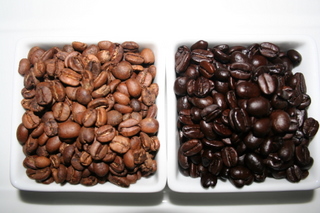
The pivot point of any roast profile occurs during the first crack, an audible popping sound caused by the rapid expansion of water vapor and carbon dioxide within the cell structure of the bean. Light to medium roast profiles, favored by modern specialty cafes, are typically dropped from the roaster shortly after first crack ends to preserve delicate floral and fruit acids unique to the bean origin. Darker roasters allow the roast to progress toward second crack, where structural fibers break down and oils migrate to the surface, creating smoky, chocolate-heavy profiles at the expense of origin characteristic flavors.
EXTRACTION AND THE MODIFIED RETAIL EXPERIENCE
The final link in the value chain occurs at the point of extraction, where precision equipment converts dry ground coffee into a liquid beverage. Modern espresso machines utilize PID temperature controllers, variable water pressure profiling, and volumetric dosing to ensure repeatable extraction parameters. Baristas carefully calibrate grind size down to the micrometer to achieve optimal solubilization of coffee solids, targeting an extraction yield between eighteen and twenty-two percent to avoid sour under-extraction or bitter over-extraction.
This end-to-end focus on quality has dramatically reshaped restaurant and cafe economics. Operators who invest in direct-trade sourcing, high-end roasting equipment, and rigorous staff training are able to capture significantly higher retail margins while building brand loyalty among increasingly knowledgeable consumers.
For consumers and hospitality professionals alike, understanding the complex supply chain behind specialty coffee highlights the growing true cost of quality. As climate volatility impacts traditional growing regions and precise processing demands greater technical skill at origin, premium retail pricing reflects an extensive network of specialized labor rather than simple brand markup. Hospitality operators who communicate this origin story effectively can justify higher price points, build sustainable sourcing partnerships, and offer guest experiences that elevate coffee from a routine commodity to a culinary destination.
Sources and methodology
Reported from the public datasets below.
More from the Foodie Pundit Newsroom
- Dutch Agri-Food Tech VC Deploys First Capital Wave into High-Yield Supply Chain Startups
- Overextended Restaurant Chains Face Retrenchment As Rapid Growth Sprees Spark Financial Strain
- The Apiary Assassin: A Mysterious Bee Plague Has Scientists Racing For A Cure
- Smucker's 'Sugar-Washing' Scandal: Why That Splenda Label Could Cost Millions
- Cognac market hits $6 billion, bougie drinkers love French spirits