The Future of Asian Greens Is Being Rewritten by Genetic Engineering
New research into the genetic blueprint of yu choy, a cornerstone of Asian cuisine, could unlock produce that is more resilient, flavorful, and available year-r
By Foodie Pundit Newsroom - Published - Updated - Section: Agriculture Supply
Key points
- New research has mapped 36 genes in yu choy (Brassica rapa) that control how the plant transports hormones, which is critical for its growth and survival.
- Two specific genes, BraABCB27 and BraABCB28, were found to be key players in responding to environmental stress like heat and drought.
- These genes physically interact with hormone receptors, creating a rapid-response system that helps the plant adapt to changing conditions.
- This genetic understanding can be used to breed or engineer new varieties of yu choy and related vegetables that are more resilient to climate change.
- Ultimately, this could lead to more stable supply chains, less price volatility, and better quality Asian greens for consumers and restaurants.
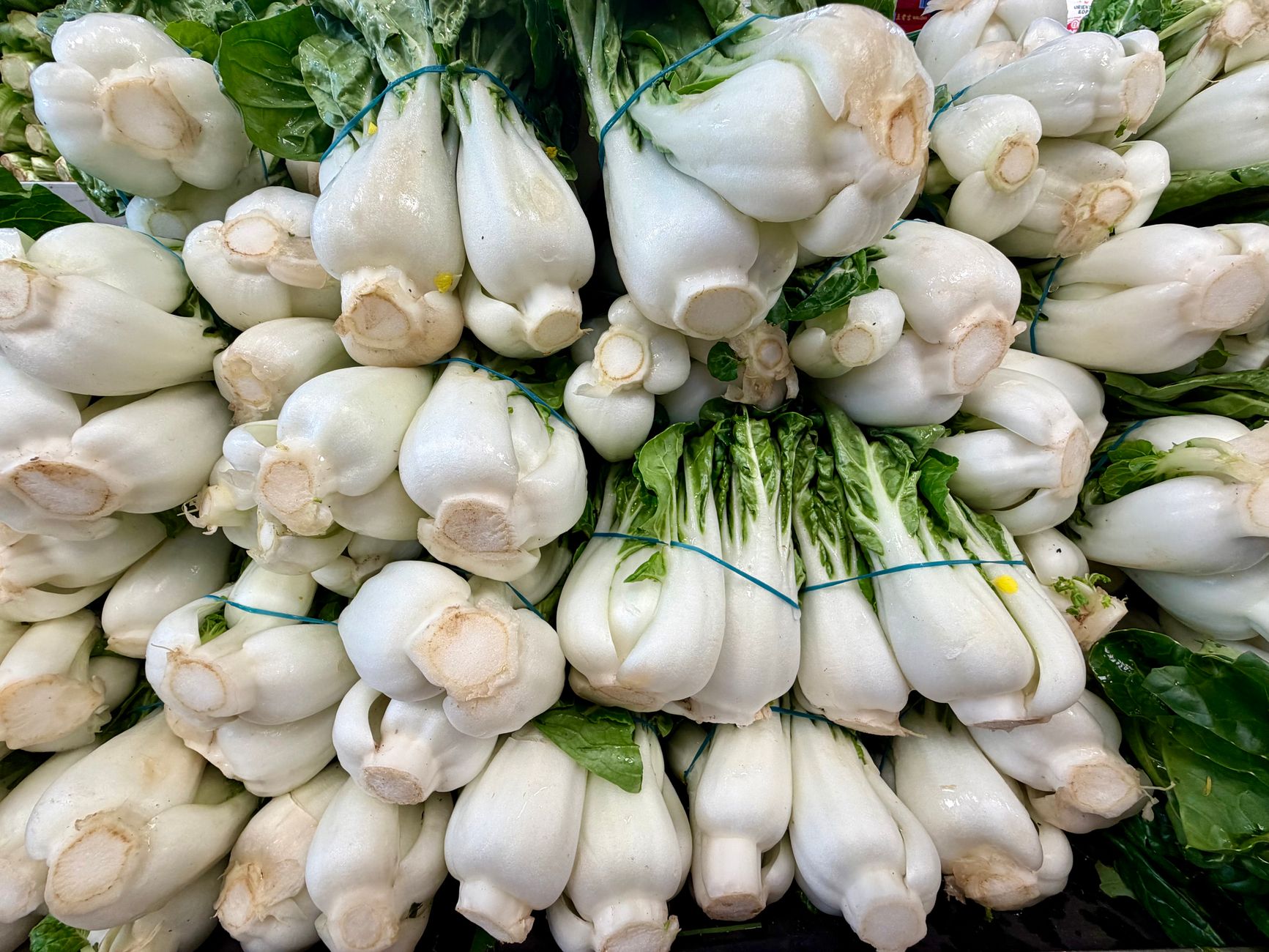
Walk through any vibrant wet market in Hong Kong or a bustling Asian supermarket in Los Angeles, and you will find it: neat bundles of yu choy, its glossy, deep green leaves and slender stalks a staple of countless dinner tables. Known scientifically as Brassica rapa var. parachinensis, this leafy green is a culinary workhorse, celebrated for its slightly sweet, mildly bitter flavor that shines in simple stir-fries, comforting noodle soups, and delicate steamed preparations.
But behind this everyday vegetable lies a complex biological drama. Like all crops, yu choy is locked in a constant battle for survival against environmental stressors. A sudden heatwave can cause it to bolt, turning its leaves unpleasantly bitter.
An unexpected drought can stunt its growth, leading to meager yields and higher prices. For farmers, these vulnerabilities translate directly into economic uncertainty. For consumers, they mean fluctuating quality and availability at the grocery store.
Now, a groundbreaking study is peeling back the genetic layers of this essential green, offering a glimpse into a future where yu choy is not just a survivor, but a thriver. Researchers, in findings published in the journal Plant Cell Reports, have conducted a deep dive into the plant's genome, focusing on a specific family of genes that control how it responds to the world around it. Their work is not just an academic exercise; it is the first step toward engineering a new generation of yu choy that is more resilient, more adaptable, and potentially even more flavorful.
This research zeroes in on a group of proteins known as ABCB transporters. Think of them as the microscopic bouncers and gatekeepers of every cell in the plant. These proteins sit in the cell membrane and use energy to pump specific molecules, including critical plant hormones, in and out.
These hormones, like auxin and brassinosteroids, are the master regulators of plant life. They dictate everything from how tall a plant grows and how its roots develop to when it flowers and how it copes with environmental stress.
By mapping out this genetic architecture, scientists are creating a new playbook for crop improvement, one that could fundamentally alter the economics and supply chain of one of the world's most important vegetable families.
The foundation of the new research, authored by Yanyan Li and a team of colleagues, was to build a comprehensive catalog of the ABCB transporter genes specifically within yu choy. It was a massive undertaking in genetic accounting. The team identified 36 distinct "BraABCB" genes, each holding a piece of the puzzle to understanding the vegetable's core functions.
These genes are not a random assortment. The researchers found they could be classified into four distinct groups based on their evolutionary relationships. This classification is crucial, as it allows scientists to make educated guesses about a gene's function based on its known relatives in other, more extensively studied plants, such as Arabidopsis thaliana, the lab rat of the plant world.
Analysis revealed that the BraABCB gene family is highly conserved, meaning it has changed very little over long evolutionary timescales. This stability suggests that these genes perform absolutely essential, non-negotiable functions for the plant's survival. They are not evolutionary novelties but part of the ancient operating system of the entire Brassica genus, which includes everything from cabbage and broccoli to cauliflower and kale.
The team's work showed that these genes primarily underwent what is known as purifying selection. This evolutionary pressure weeds out harmful mutations, preserving the core function of the genes. In essence, evolution has decided that the jobs performed by these ABCB transporters are too important to mess with. They are the guardians of the plant's hormonal balance, and their reliability is paramount.
Within these genes, the scientists found the characteristic building blocks of ABCB transporters: nucleotide-binding domains, which act as the engines that power the transport process, and transmembrane domains, which form the channels through the cell membrane. This structural consistency confirmed they were looking at the right genetic components, the very machinery responsible for shuttling vital compounds across cellular barriers. It was the first, critical step in linking the genetic code of yu choy to its real-world resilience.
Having identified the key players, the researchers next sought to understand what they actually do. They focused on a specific subset of genes, Group IV, which were suspected to be heavily involved in hormone transport and stress response. The central question was: how do these genes react when the plant is put under pressure?
To find out, they subjected yu choy seedlings to a series of environmental challenges. They simulated a drought by withholding water. They mimicked a heatwave by cranking up the temperature. Then, they directly applied the plant hormones that the ABCB transporters are believed to carry: brassinolide, a type of brassinosteroid, and indole-3-acetic acid, the most common form of auxin.
The results were revealing. The expression levels of the selected genes, a measure of how active they are, changed dramatically in response to these treatments. Some genes became more active during drought, while others revved up under high heat.
This diversity in response patterns suggests a sophisticated system of specialization, where different genes are deployed to handle different environmental threats. It is a finely tuned orchestra of genetic activity, allowing the plant to mount a tailored defense to whatever the world throws at it.
Of particular interest were two genes, BraABCB27 and BraABCB28. These two are the yu choy equivalents of well-known hormone transporters in the model plant Arabidopsis, specifically AtABCB1 and AtABCB19, which are famous for their role in managing auxin flow. The study confirmed that the yu choy versions were not just similar in sequence but also in function, showing distinct responses to hormone applications.
Sources and methodology
Reported from primary records. Open any source to verify a claim.
More from the Foodie Pundit Newsroom
- Summer Skillet Sensation: The One-Pan Dinner Winning Over Dinner Tables This Season
- McDonalds Redesigns Its Iconic Big Mac Cooking Process to Elevate Quality
- Your Favorite Korean BBQ Just Got More Expensive: What GEN Restaurant Group's Latest Filings Mean For Your Next All-You-Can-Eat Feast
- Kickoff and a Bite: How Kansas City Is Turning the 2026 World Cup Into a Food Tourism Gold Rush
- The Everything Aisle: How Ancient 'Food as Medicine' Traditions Are Taking Over Your Grocery Store