The Science of Lamination: Master Bakers Share Technical Standards for Perfect Croissants
Professional pastry chefs reveal the precise temperature controls and ingredient ratios required to produce perfect laminated viennoisserie at home.
By Foodie Pundit Newsroom - Published - Section: Desserts Snacks
Key points
- Butterfat content of eighty-two percent or higher is critical to prevent excess water from ruining dough lamination.
- Thermal management of dough and butter plasticity prevents fat from absorbing prematurely into the gluten matrix.
- Cold fermentation relaxes gluten networks to allow even sheet thickness without dough recoil.
- Simulating commercial steam conditions during early bake phases maximizes oven spring and crust quality.
The commercial pastry sector operates on margins dictated by fat ratios and dough temperature control. While home bakers frequently attribute poor lamination to flour quality, industry data reveals that thermal management remains the primary failure point. A croissant relies on alternating layers of butter and dough, known in the trade as a detrempe. When heat destabilizes these boundaries, the fat absorbs into the flour, yielding a dense, bread-like structure rather than a light honeycomb crumb.
Recent insights compiled by the Evening Standard highlight how professional kitchens standardize variables that domestic cooks typically overlook. Professional production environments maintain strict ambient temperatures, usually around sixty-five degrees Fahrenheit, to keep butter plastic yet firm. Without controlled room conditions, domestic bakers must rely on frequent refrigeration intervals to prevent the butter block from melting or shattering during the rolling process.
Understanding the physics of steam release is essential for predicting bakery profitability and product quality. As water in the dough and butter evaporates during baking, it expands within the enclosed flour pockets. This vapor pressure forces the laminated layers apart before the proteins and starches set. If the butter incorporates into the dough prematurely due to warmth, no steam pockets form, resulting in a flat pastry with poor volume.
INGREDIENT CHEMISTRY AND HYDRATION CONTROL
Selecting the correct raw materials forms the second baseline requirement for high-end viennoisserie. Professional pastry chefs emphasize that butter selection involves more than flavor preferences. European-style unit blocks containing at least eighty-two percent butterfat are standard in commercial operations. Lower butterfat alternatives contain excess water, which creates uncontrolled steam pockets and tears the delicate dough structure during folding.
Flour composition introduces another layer of mechanical complexity. High-protein bread flour provides the structural integrity needed to trap expanding gases, but excess gluten development makes the dough elastic and difficult to roll evenly. Many top bakeries utilize a calculated blend of high-protein and lower-protein pastry flours to balance strength with extensibility. Proper hydration ratios ensure the dough remains malleable enough to sheath the butter without cracking.
The role of yeast and fermentation speed cannot be understated in commercial production timelines. Overnight cold fermentation slows yeast activity while allowing complex organic acids to develop in the detrempe. This extended resting phase relaxes the gluten network, preventing the dough from snapping back during rolling. A relaxed dough allows for consistent sheet thickness, which directly correlates to uniform bake times and internal cell structure.
LAMINATION STRATEGIES AND THERMAL MANAGEMENT
The folding process, or turns, determines the final layer count of the pastry. Commercial operations frequently utilize three single turns or a combination of a double and single turn to achieve optimal layering. Excessive turns create layers so thin that they fuse during baking, while too few turns produce thick, heavy dough pockets. Precision in edge squaring during the rolling phase ensures uniform fat distribution across the entire sheet.
According to reporting by the Evening Standard, maintaining a consistent fat block hardness relative to the dough hardness is the single most critical technique used by master bakers. If the butter is significantly colder than the dough, it will fracture into broken shards under the rolling pin. If the butter is warmer, it will smear and blend into the gluten matrix. Achieving matching plasticity requires precise resting periods in temperature-regulated refrigeration units.
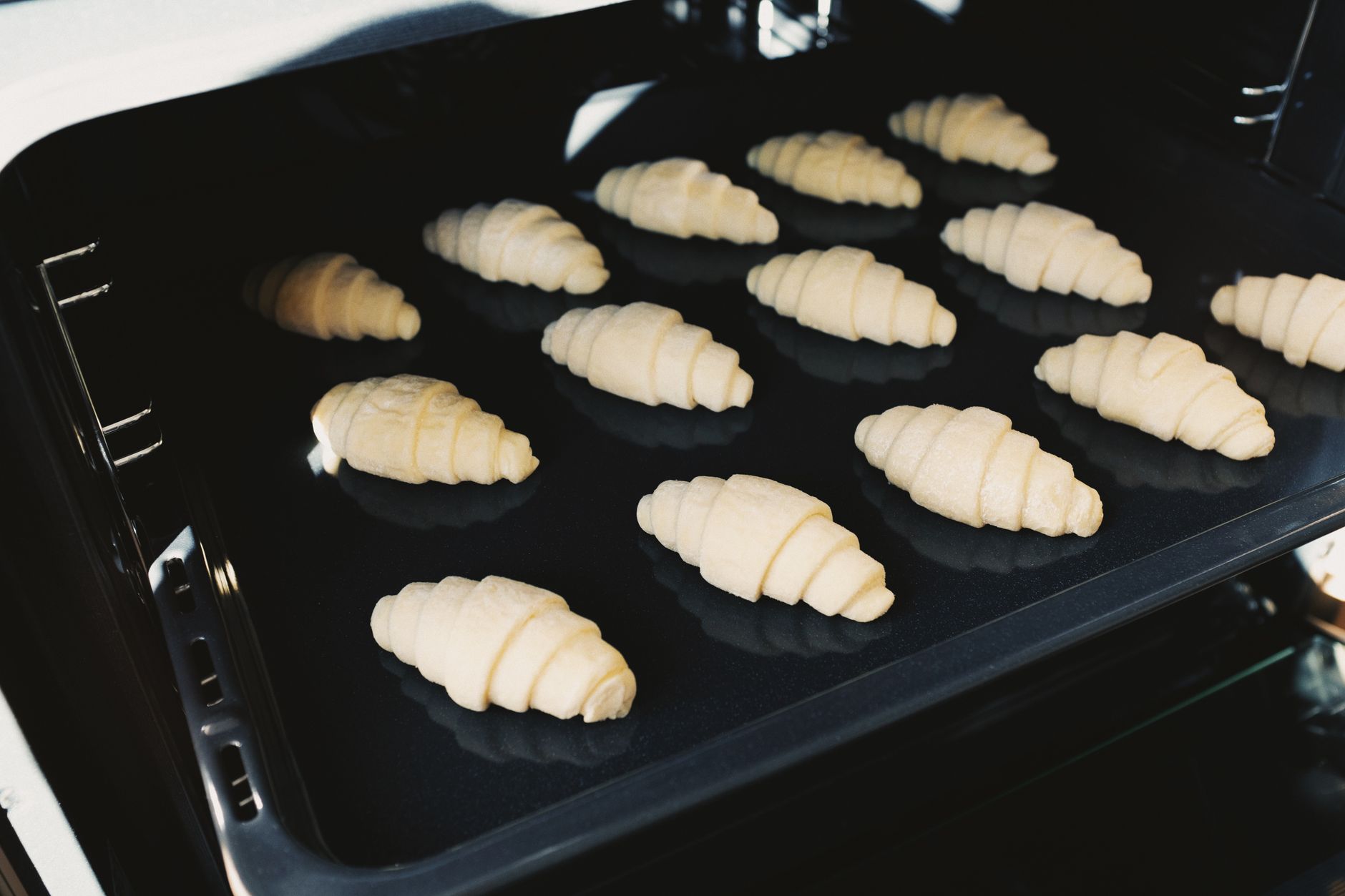
The final shaping and proofing stages represent the last hurdle before the oven environment. Proofing must occur at a temperature just below the melting point of the butter, typically around seventy-eight to eighty-two degrees Fahrenheit. If the proofing cabinet is too hot, butter leaks out of the raw pastries onto the baking sheet, destroying the lamination layers before heat applied in the oven can set the structure.
For commercial bakeries, minimizing butter loss during proofing and baking directly improves yield and profit margins. Butter represents one of the most expensive raw inputs in a specialty bakery, making waste reduction a core operational goal. Domestic bakers can mimic commercial success by utilizing basic thermal meters and heavy marble rolling pins, which retain cold temperatures better than traditional wooden tools.
Oven environment control determines the final exterior finish and internal texture. Commercial deck ovens utilize steam injection during the initial minutes of the bake to keep the outer dough pliable, allowing maximum oven spring before the crust hardens. Home bakers can simulate this mechanism by placing a preheated cast-iron skillet filled with lava rocks or water at the bottom of a conventional oven to generate a moist baking chamber.
The growing consumer demand for premium artisan baked goods has elevated the standard for viennoisserie across all market segments. By adopting standardized professional metrics around butterfat content, dough hydration, and thermal control, small-scale operations and dedicated home kitchens can achieve results that match high-volume commercial producers. The transition from erratic outcomes to reliable quality depends on treating pastry production as an exercise in mechanical discipline.
For retail consumers and home enthusiasts, understanding professional pastry mechanics demystifies the price point of premium bakery items. High-grade croissants command premium prices because they require expensive, high-fat dairy products and labor-intensive thermal management. Knowing how environmental conditions impact the final product allows home cooks to optimize their baking schedules, invest in high-fat European butter, and manage dough temperature effectively to achieve professional results without specialized commercial machinery.
Sources and methodology
Reported from the public datasets below.
More from the Foodie Pundit Newsroom
- Summer Grazing Trend Resurfaces as Inflation and Heat Reshape Evening Meal Habits
- General Mills Beats Earnings Expectations on Robust Cereal and Snack Sales
- Commercial Bakery Chains Face Sudden Closures as Margin Pressures Mount
- The Science of Lamination: Professional Bakers Detail Technical Keys to Perfect Croissants
- As Summer Heat Arrives, No-Cook Snack Dining Resurges Across Household and Grocery Markets